The World Without Us: Nature and the Coronavirus

Los Angeles Times: “Column: Bears thriving at Yosemite. Clear skies. Does coronavirus reveal a ‘World Without Us’?” — “Skies have cleared over the smoggiest urban centers, wildlife runs free in parks, streets and plazas, flowers rise from the cracks of formerly well-trodden sidewalks and birdsong replaces the more motorized score of modern daily life. With much of the world’s population on COVID-19 lockdown, nature has never seemed more gloriously present — sublimely indifferent to human anxieties, eager to run riot over all the places in which it was once controlled, to return to the spaces from which it was expelled.”

Washington Post:As humans stay indoors, wild animals take back what was once theirs” — “It’s not easy being a baby sea turtle, hatching into a human’s world. Curious children, leashless dogs, oblivious joggers: The dangers are many. Some never complete their postnatal dash to the ocean.”

New York Times: “Animals Are Rewilding Our Cities. On YouTube, at Least.” — “At the end of March I was, like many people, spending hours each day on the internet, my attention glued to graphs of projected deaths, maps of infection hot spots, photos of masked travelers huddled in subway cars. But then new images appeared, and they were quite unlike the others. Here were maps showing improvements in air quality, photographs of deserted streets and squares bathed in sunlight and, most surprising, videos of wild animals thriving in newly deserted towns and cities.”

Washington Post: “The coronavirus pandemic has halted tourism, and animals are benefiting from it” — “As the coronavirus pandemic spreads, lockdowns are extended and restrictions on global travel continue to tighten, one of the industries hit hardest by the lack of travelers has been animal tourism.”

In a time of crisis, we can see the public becoming more conscientious of everyday interactions such as wearing face masks or being aware of the space between yourself and a stranger. In the stillness of lessened social obligations, we are able to reflect on the nature of our backyards, parks, and wild. There are crowds being drawn to outdoor spaces, campgrounds full of those eagerly wishing to experience something beyond the confinements of their homes, apartments, or (for some) workplaces as the weather gets warmer. In this unprecedented time, some are able to find peace in nature, observe it more closely, and watch the seasons change as we sail forth uncertainly into the future.

It is clear that the lockdown of humans is helping nature and biodiversity rediscover their natural spaces. With the lockdown, not much is happening, it is quiet. And animals, be they coyotes or turkeys, are potentially rediscovering their confidence and peace, allowing them to come closer to urban areas.

Still, a significant shift is about to take place. If we really do live in the Anthropocene—an epoch of natural history defined by the effects of human beings on the planet—then a drastic curtailing of our activity (reduced air and car travel; our disappearance from streets, parks, and beaches; changes in hunting, fishing, and wildlife management practices) will have effects that are felt throughout nature. What are animals, and other wild things, going to get up to in our absence?

The animals that are most likely to undergo rapid, dramatic shifts in behavior when human beings go inside are also some of the most visible. In New York City, squirrels, pigeons, rats, raccoons, and a few gull species will have to adapt right away. In places where bears and coyotes are more common, those populations will also have to quickly recalibrate. Any animal that depends on human scraps for a significant portion of its diet will have to either find alternative local food sources or fan out to new places. It’s interesting because a lot of the wildlife that tends to thrive in cities are generalists. They take advantage of any resource they can get, and have a lot of behavioral plasticity. That sets them up to be able to adapt to short-term changes in the environment quickly and easily.

In cities, that could mean moving to new places. The mass closure of restaurants and dramatic declines in public (i.e. subway) ridership could force rat populations that inhabit those places to fan out and look elsewhere for meals. If parks close or empty out significantly, raccoons and squirrels will no longer be able to depend on the steady supply of food offered by public garbage cans. If public beaches abbreviate their seasons, the herring gulls and laughing gulls that spend the warmer months chasing down potato chips and other food left unattended by beachgoers will have to seek out a new food supply.

It’s pretty clear where all those animals will need to go if they want to keep eating scraps. Although human garbage will disappear from some public spaces, people are still eating the same amount they were before. I thought about all of the cooking I’ve been doing recently, and the pictures of home-cooked meals that my friends and family have been sending me. There’s an influx of trash in residential neighborhoods and that’s a smorgasbord for these animals.

Natural systems, when you look at them closely, are deeply interconnected. A year that produces a high yield of pine cones, for example, even in just a single area, can have ripples that lead to population spikes, changes in migration patterns, and habitat realignment for multiple species across vast areas for more than one season. We can make predictions based on what we know about wildlife but the urban system is quite complex. Animals have learned to adapt to and make use of human behavior in countless ways, from the birds that follow fishing boats out to sea, to the peregrine falcons and red-tailed hawks that nest on bridges and skyscrapers, to the eels that writhe through our sewers.

One of the most significant human-made impositions on wildlife, our highways and streets that hum constantly with traffic, have emptied out as travel declined dramatically. Roadways, cars, and traffic have the ability to contain wildlife in particular places. As those barriers came down, animals suddenly found their movements less inhibited. Ranges have expanded, and some animals that were suffering from constricted habitat might have found themselves in a more secure situation. It sounds delightful, but it’s a dramatic change that came on quickly and will flip back just as quick, as soon as we turn the switch.
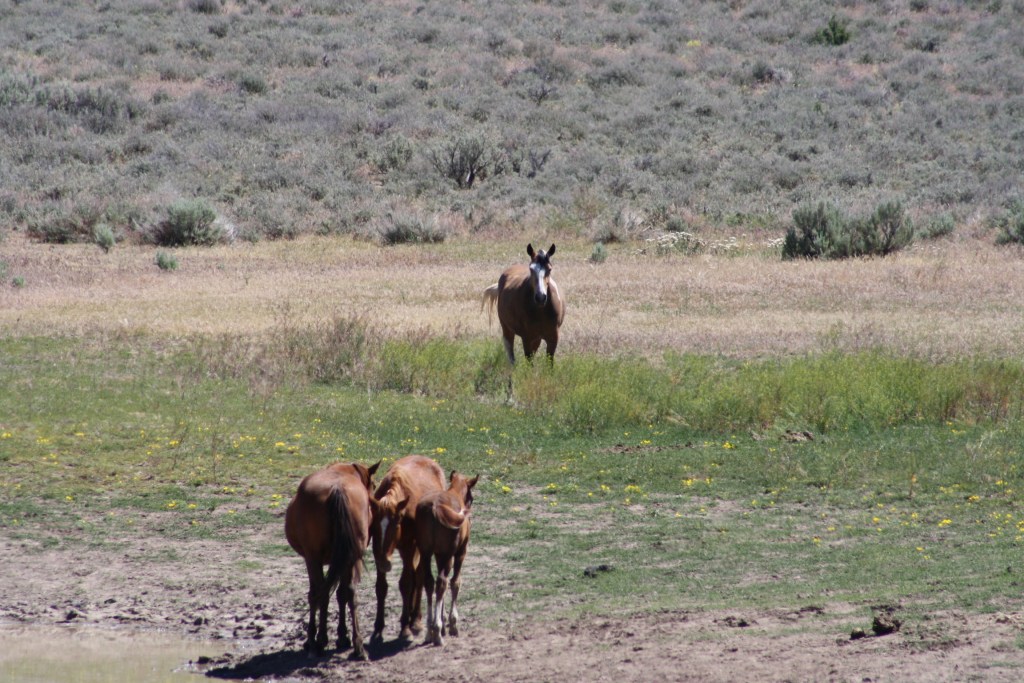
Wild horses on Steens Mountain in Eastern Oregon

Indeed, every animal exists in a wider food web. In urban settings, rats, squirrels, and pigeons are prey for larger animals like feral cats and raptors, which might have to adjust their behavior as their food sources fan out. A change in behavior even in a single species could set off a chain reaction that affects animal behavior in countless unpredictable ways. There are a dizzying number of moving parts, all of them connected in a giant chain of causes and effects that are nearly impossible to predict. A large population of white-tailed deer, for example, can devastate a forest’s understory by grazing on low-lying plants and saplings. Even a modest population bump from a reduction in automobile collisions could set back woodlands for years to come.

There are other species that might stand to benefit, at least in the short term. If public beaches don’t fill up this summer, shorebirds that nest there will likely have a better breeding season than they would otherwise, with thousands of miles of new habitat suddenly available to them when they arrive. Birds and mammals that are highly sensitive to noises or susceptible to being killed by car traffic will probably fare slightly better too. There are hints that things are already starting to change. It’s hard not to feel like these are tremors of things to come—a realignment in the way animals interact with the world that will match, in some ways, the extraordinary intensity and insanity of what’s unfolding in the human world every day. There have already been many YouTube videos popping up showing whales coming further up water channels, coyotes prancing along sidewalks, and news of animals thriving in wildlife areas with reduced tourism.

Still, it would be idiotic to indulge in the fantasy that human beings going inside for a few months will somehow allow the natural systems we’ve damaged over centuries to “heal.” The wear and tear of human behavior on wildlife has been long-term and extensive. Many of the ways humans affect wildlife are more permanent than us scaring them into staying put or accidentally feeding them with our trash. 

Our disappearance from the world is happening at a time of massive flux for creatures. This might have its own set of influences. Our abrupt retreat inside was preemptive, a reaction to information from scientists and journalists about an event we knew was coming. Animals don’t have newspapers or epidemiologists to tell them how to prepare; they’re still just out there, migrating, hunting, trying to survive. It’s one of the reasons their reactions are so difficult to anticipate. Just like us, wildlife is at the beginning of this crisis—they just don’t know it yet. While we get guidance from political figures and doctors, animals will respond with reflex and instinct. And even as they adapt to us being gone, they can’t realize that, eventually, we’ll come back. Which means that despite modest benefits that might reach specific populations due to our absence, there’s no reason to believe that the factors that initially put stress on those animals won’t come roaring back whenever people head outside again.

My best guess is that there will be further developments in the coming weeks—reports of animals spreading out into new areas to explore habitat options or look for food. Some may become aggressive or behave in other strange ways. Human beings and bears, for example, will come into closer contact than either species is accustomed to. It might lead to a modest shift, or a series of isolated, temporary incidents. 

With all this in mind, I recently took a trip to the Steens Mountain in Eastern Oregon. I enjoyed the sights of beautiful violet-green swallows, golden eagles, wild horses, and prairie dogs. I locked eyes with a pair of mule deer who proceeded to go stotting off, presumably looking for a safe place for the mating season. As I was getting ready to leave, an American pika caught me off guard. It was staring from the end of a gravel parking lot a few feet away. It was well within the 6-foot bubble that I’d been keeping between myself and other people—closer, in fact, than any wild mammal had ever let me get. We looked at each other for a long minute before the sound of a car traveling down the gravel road scared it behind some boulders.

Wired: “The Coronavirus Lockdown Is a Threat for Many Animals, Not a Blessing” — “It’s a trope from any movie about the end of humanity: Vegetation slowly reclaims cities, while deer and foxes roam the streets. Probably the closest we’ll ever get to this scenario without an actual apocalypse is happening right now in locked-down metropolises across the world. In San Francisco, coyotes—normally scared away by cars— are traipsing across the desolate Golden Gate Bridge. In the Welsh town of Llandudno, mountain goats are moving in. In Barcelona, wild boar have infiltrated the city center.”

Weforum: “Nature’s comeback? No, the coronavirus pandemic threatens the world’s wildlife” — “Despite promising signs that lack of human activity had lead to flourishing wildlife across the world, loss of income is causing some people to exploit the environment. Wild animals, fish and forest trees are rarely owned by anyone, and they are found in rural areas where policing is difficult.”

Older posts
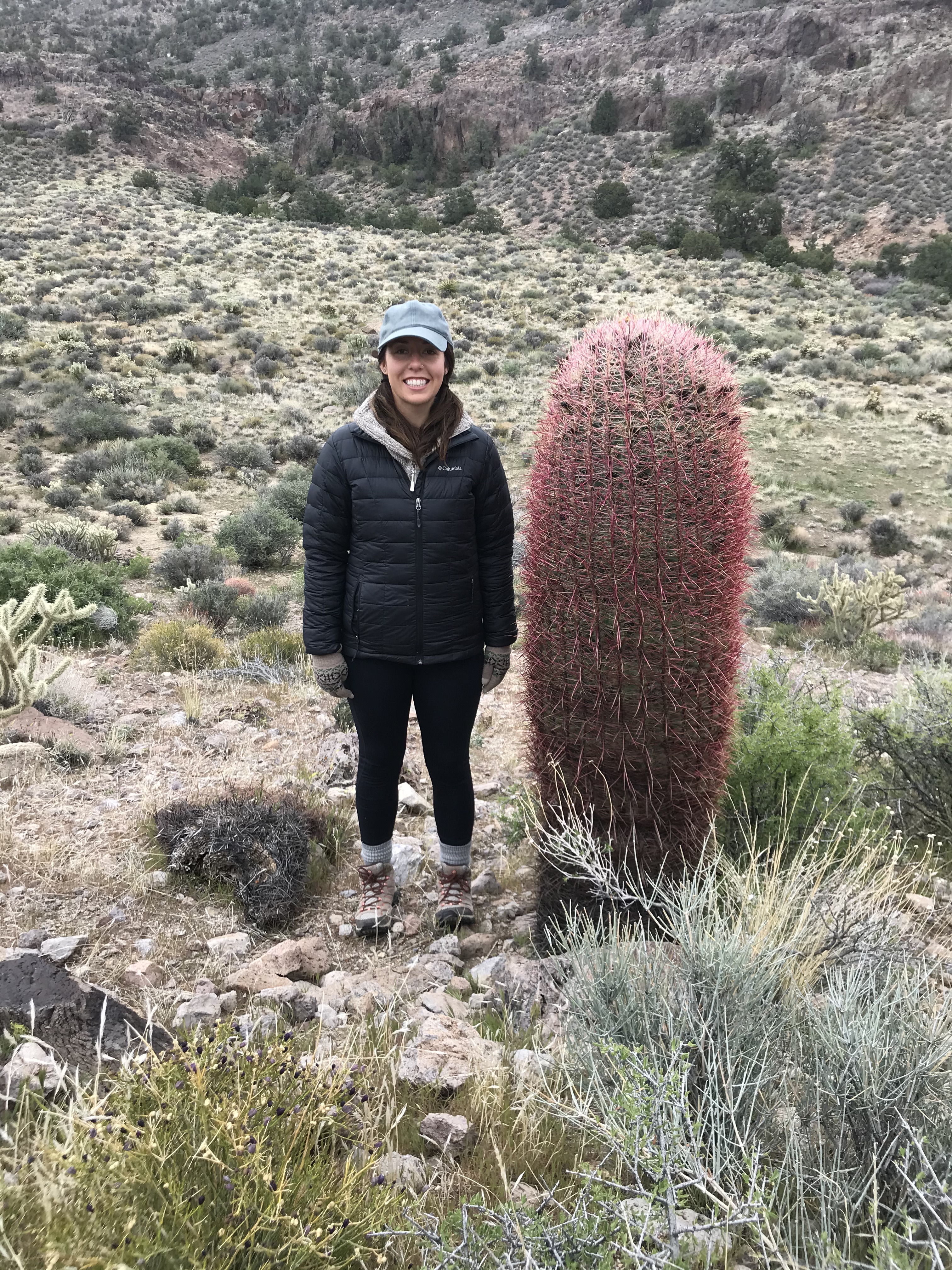
Flower Gazing Meditation:

  1. Be sure to choose a flower that resonates with you…
  2. Gaze at it with soft, relaxed eyes…
  3. Look at it as if it’s the first time you’ve ever seen a flower
  4. After 10-15 minutes have passed, thank the flower and offer it gratitude.
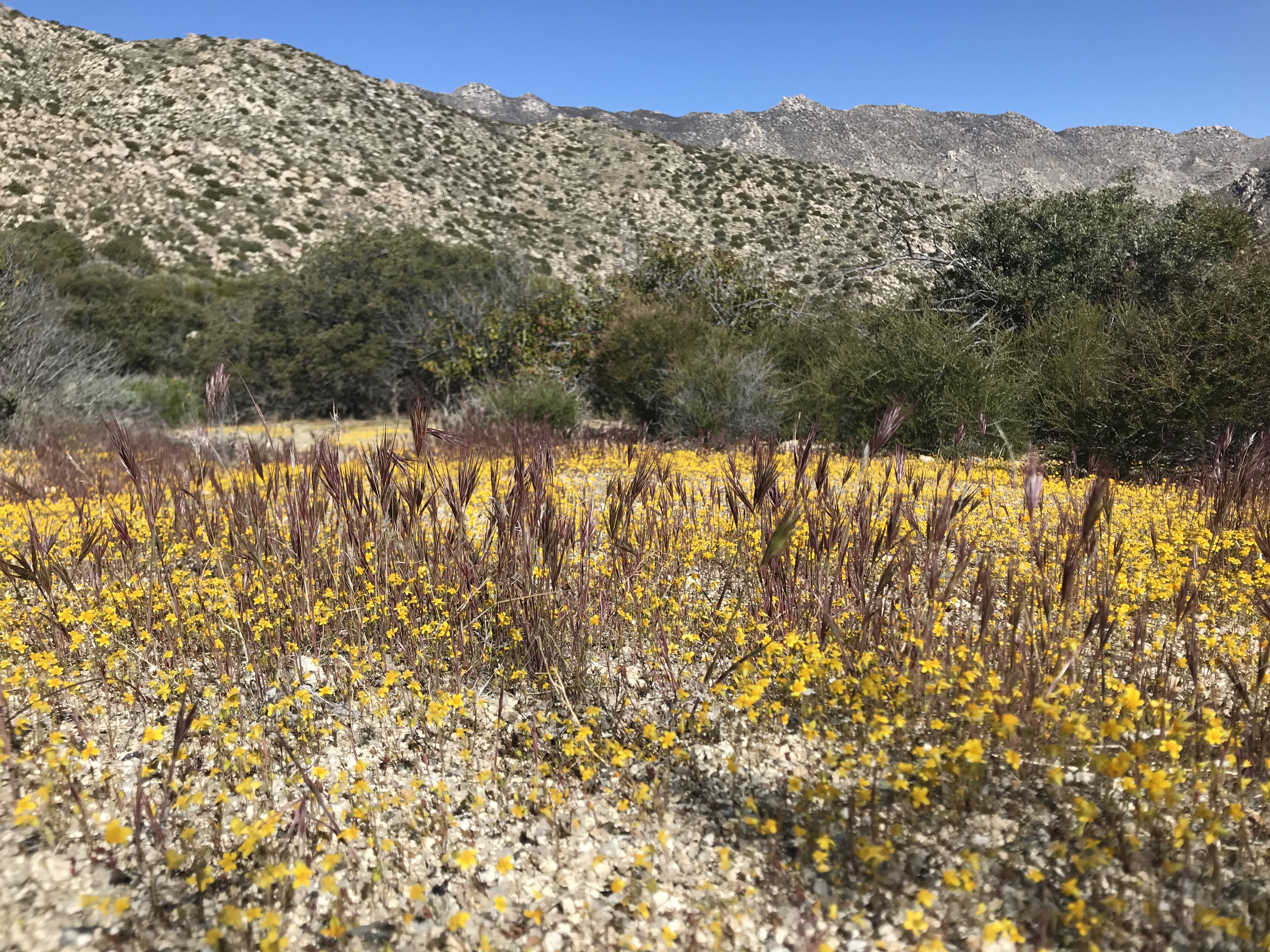
Meditative grasses in a valley on the arm of San Ysidro Mountain, Anza-Borrego State Park, California

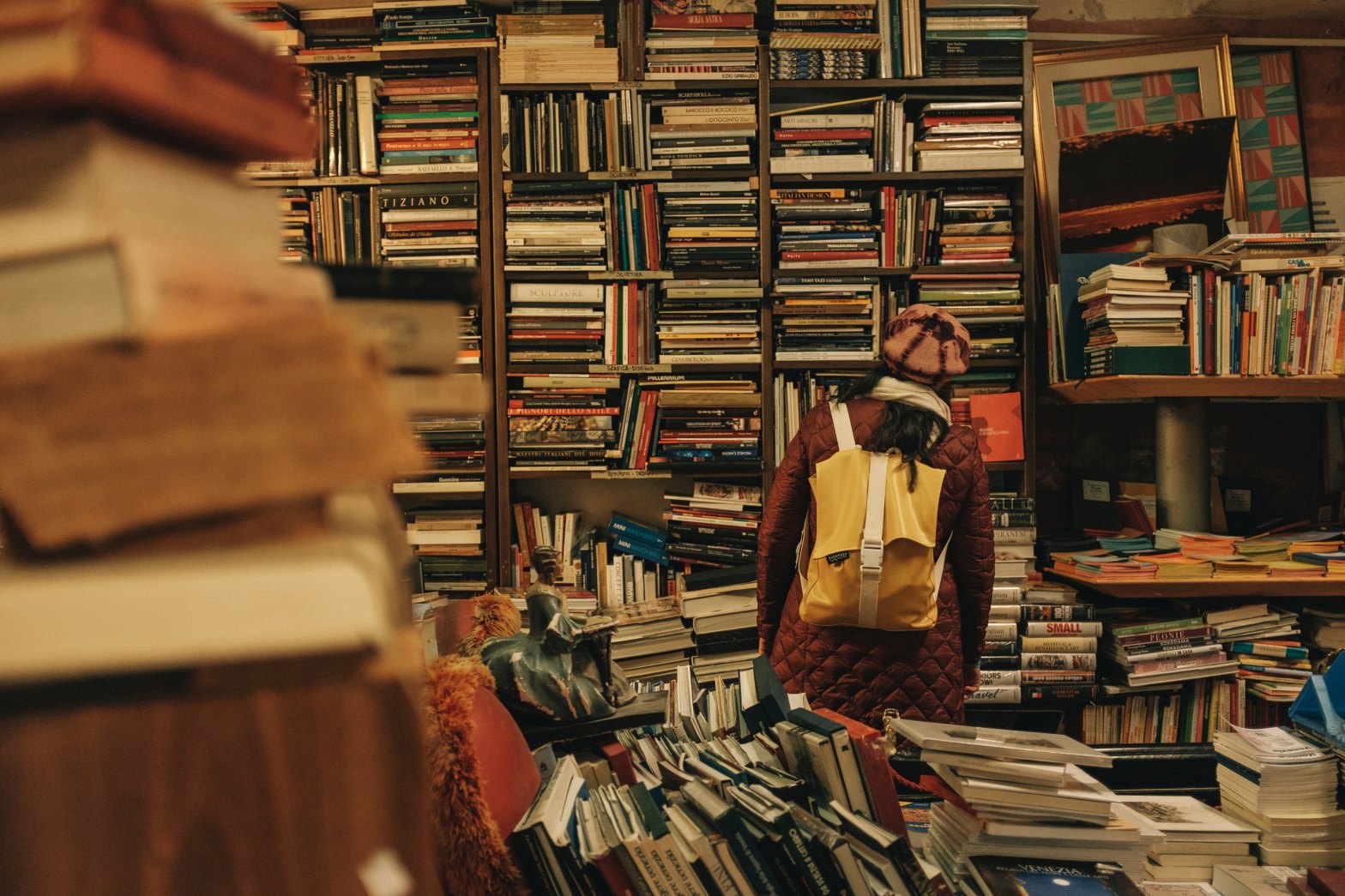
My Favorite Outdoor Adventure Books

Hey, I’m with you. Given half a chance, I would much rather hit the road than the armchair. Nothing can replace the intensity of authentic experience. Yet behind every great adventure are the stories that inspired it. We read before we go and after we arrive. In the freedom of far-flung places, we invariably find echoes of the voices that led us there.

The following list is devoted to books that have offered inspiration, reflection, and provocations in me. These are the books that seize my imagination and inspire me to continue exploring. During our days of quarantine, perhaps we can spend time planning the next great adventure. Happy daydreaming!


STORIES OF THE GRAND CANYON

undefined

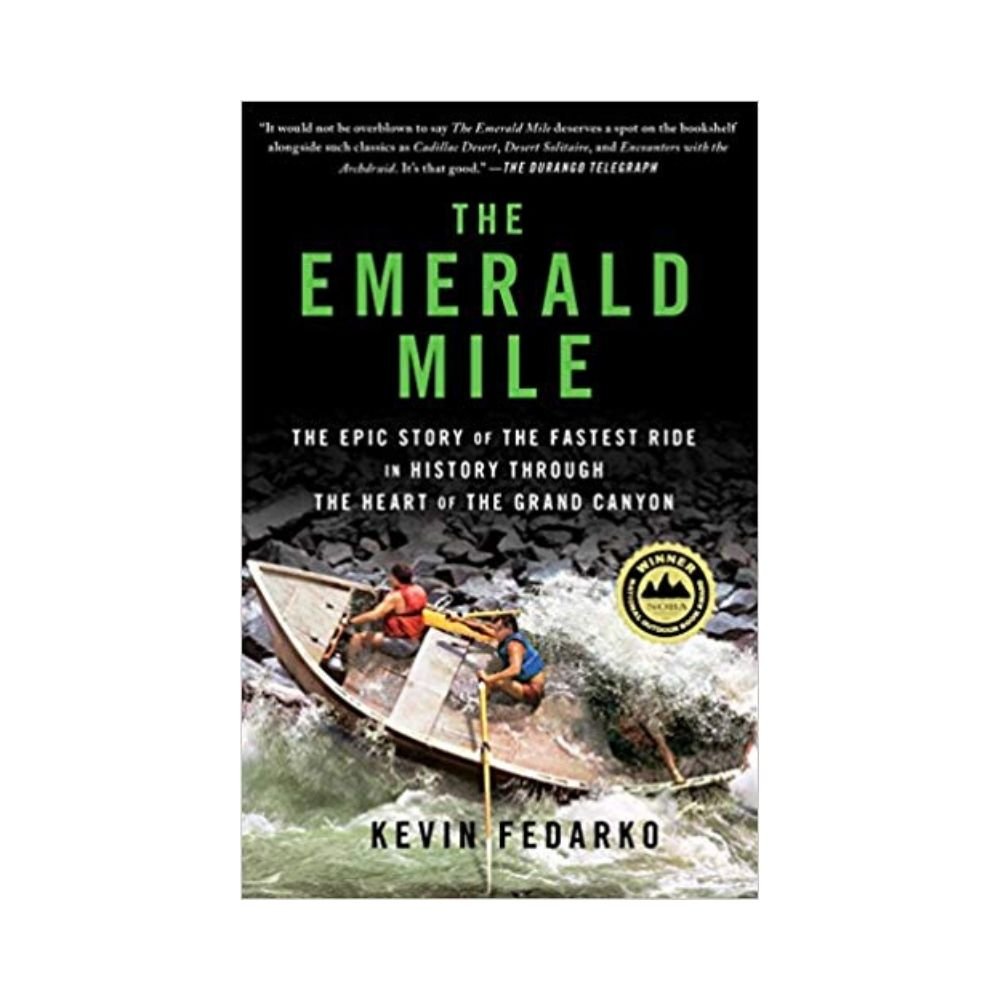
“The Emerald Mile: The Epic Story of the Fastest Ride in History Through the Heart of the Grand Canyon” by Kevin Fedarko (2013)

This was the first book I read just for fun after completing graduate school and either just because of that or the beautifully done research in the book, this has became one of my all time favorite books. Incidentally, I latched onto some other books mentioned in this one, hence the Grand Canyon having its own category in my list.

The “Emerald Mile” is the name of the boat that carried Kenton Grua and his friends down the Colorado, from Lee’s Ferry to Lake Mead, in record time. It was 1983, and dangerous flooding had turned the river into even more of a wild animal than it normally is.

Fedarko’s story about the speed attempt took a Grand Canyon campfire story and made it into a classic of adventure literature, weaving together the stories of early Grand Canyon exploration (including the Powell expeditions), the construction of the Glen Canyon Dam, the history of river guiding in the Canyon, and Grua’s biography into a rich narrative. But the book is worth a read for the adrenaline rush alone.

I found out about this story through my favorite podcast, The Dirtbag Diaries, when they interviewed him about how the book came to be. It turns out that before he could write the book, Fedarko had to run the river dozens of times to understand its personality, and his love for the river as it flows today shines through on every page. In the interview, he admitted that “the story of the speed run that’s at the heart of this book is honestly just a subversive excuse to indulge in an extended portrait of and love letter to the dories, the river, and the Canyon itself.” Though I find his writing a bit overdramatic at times, I completely fell in love with this captivating portrait of the Grand Canyon through his story-telling.

To learn more about the current threats to the Grand Canyon and how you can help, visit Save the Confluence and Grand Canyon Trust.

undefined

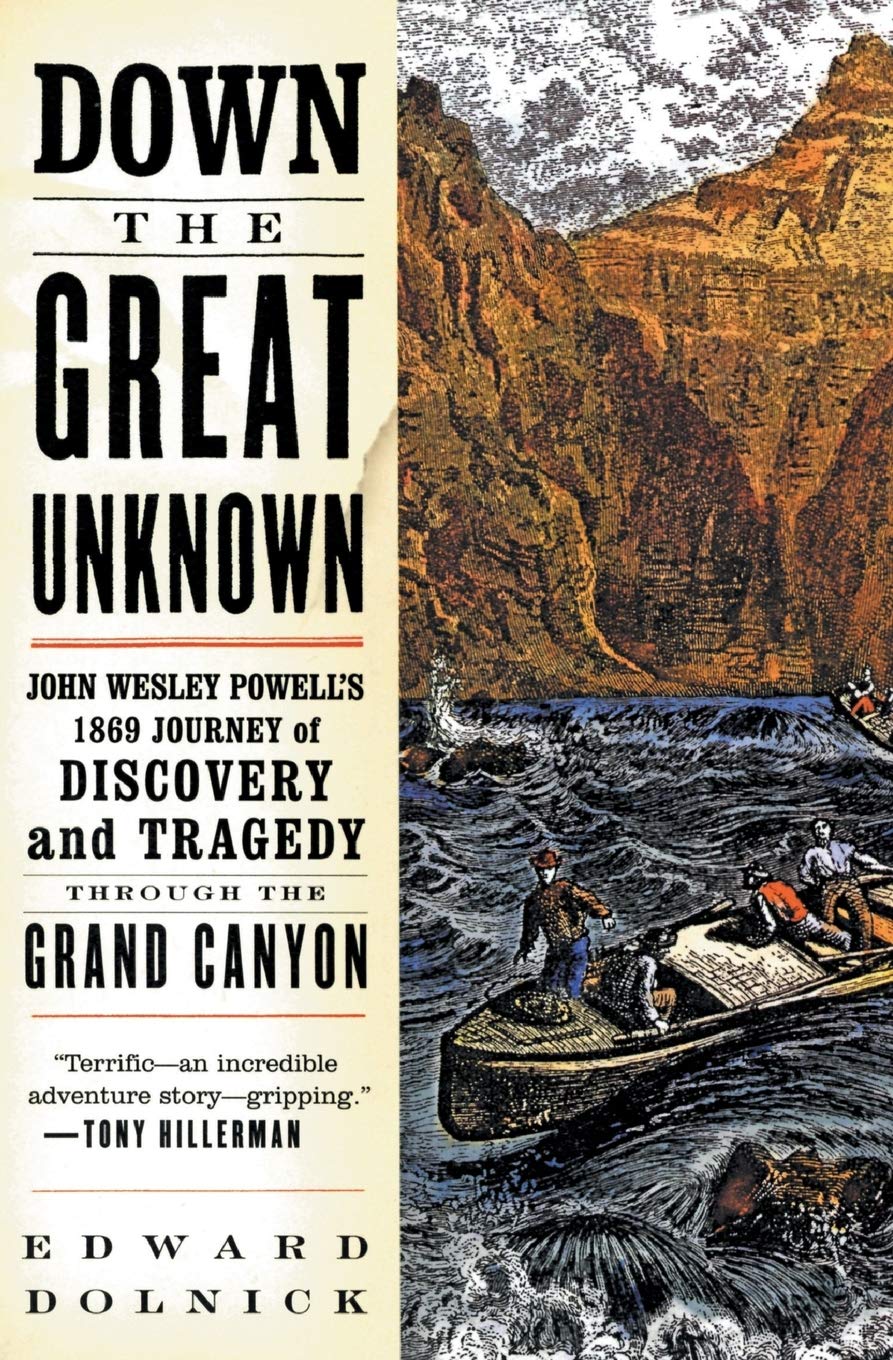
“Down the Great Unknown: John Wesley Powell’s 1869 Journey of Discovery and Tragedy Through the Grand Canyon” by Edward Dolnick (2001)

By 1869, the last unexplored stretches of American landscape were the rocky, inhospitable areas carved out by the Colorado River. That year, an eccentric one-armed Civil War veteran named John Wesley Powell assembled a rag-tag crew and set out to conquer that territory. Edward Dolnick’s book is a very detailed historical account of Powell’s journey as compiled from notes, journals, interviews and factual information gathered through a tremendous amount of research. The result is a day-by-day account of Powell’s journey, his teams’ personal lives and the newspaper stories that gripped a nation and brought worldwide attention to the first successfully recorded expedition down the Grand Canyon.

As you follow the story there are crude maps at the beginning of chapters to help the reader understand where the action takes place. Though Dolnick includes a larger map of the Colorado River at the front of the book, I thought it was way better to look at a more detailed map of the Colorado River when reading so consider getting yourself a copy. Soon enough you will be starting to plan your own post-COVID19 trip to the Grand Canyon!

undefined

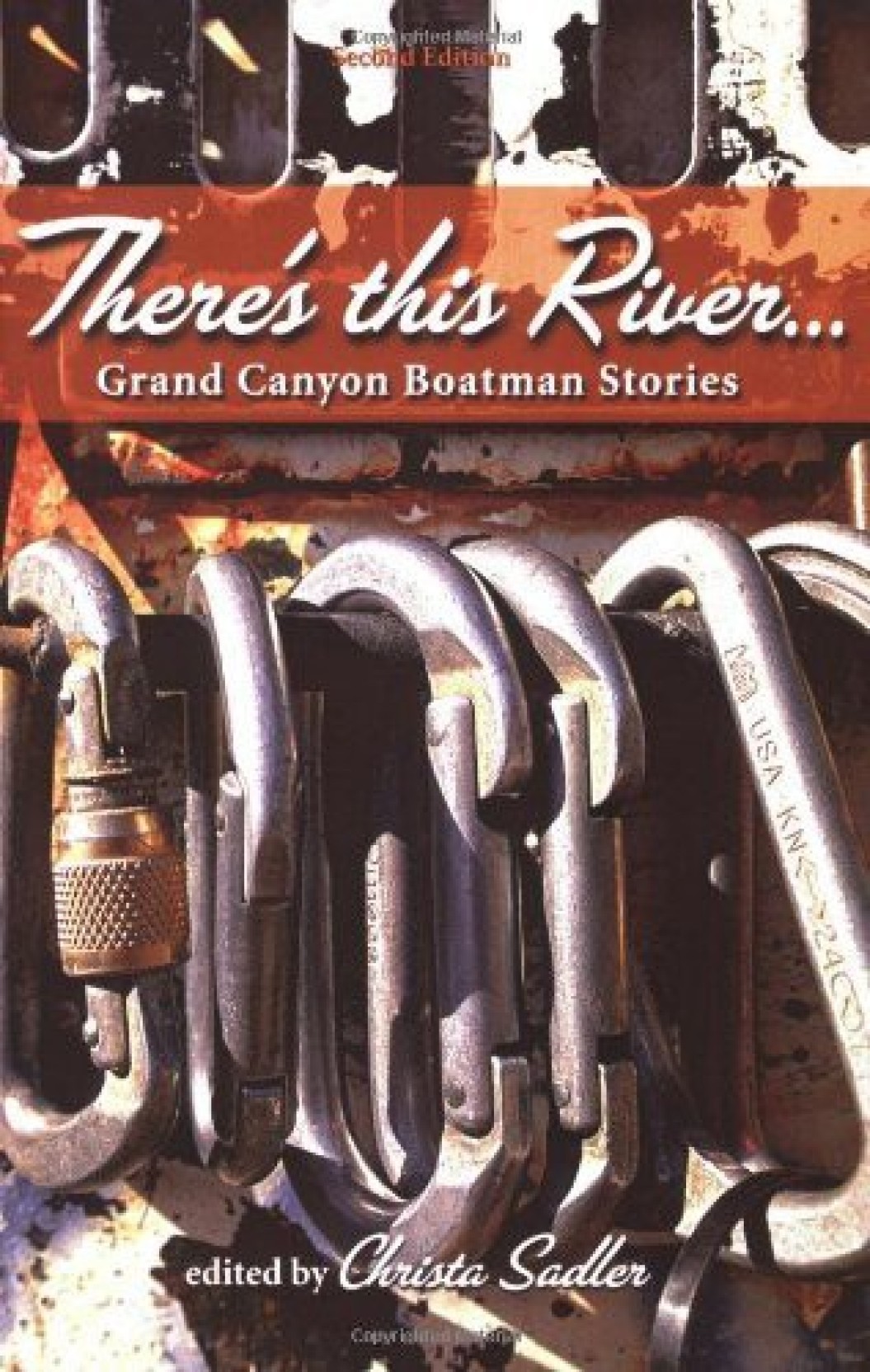
“There’s This River… Grand Canyon Boatman Stories” edited by Christa Sadler (1994)

This collection of entertaining short stories is told entirely by the river guiding community of the Grand Canyon and edited by Christa Sadler. Some say that Grand Canyon whitewater boatmen like to read some of these short stories while on-river (I have never been so I’ve only been told so). There are funny stories of river passengers and guides, sweet stories of Canyon magic, goofy stories about wildlife and real stories about dramatic river trips. It’s a fun and easy read and really gives a good glimpse of life on the river. 

BOOKS BY ROCK CLIMBERS

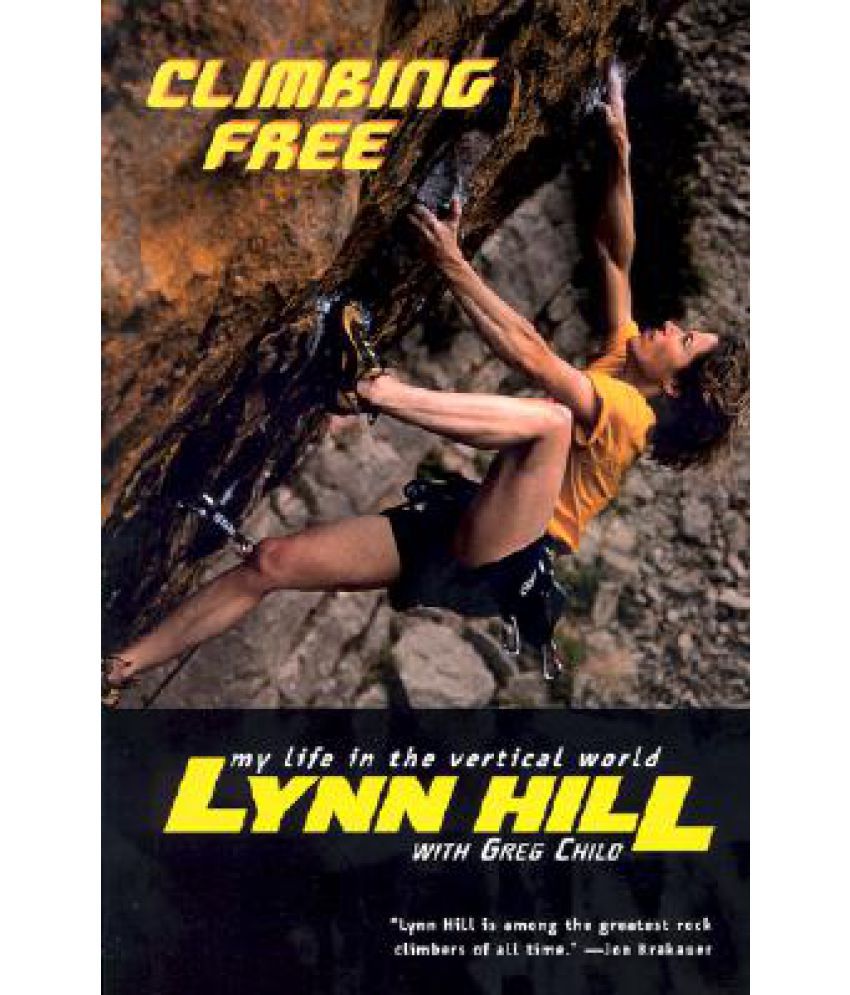
“Climbing Free: My Life in the Vertical World” by Lynn Hill and Greg Child (2002)

I borrowed this gem from a climbing buddy to learn more about the climbing legend, Lynn Hill. Lynn is one of the most amazing and overlooked athletes of our time. One of the best rock climbers in the world in the late 80’s and 90’s, she established routes so bold and difficult that few others could follow. In 1994, Lynn succeeded in climbing the first “free ascent” of the Nose on Yosemite’s El Capitan, climbing 3,000 feet of vertical granite without using gear to aid her ascent and in record time. At 5’2″, maybe 110lbs, with hands smaller than my own she’s a total badass and has become one of my all-time favorite idols.

This book is her official autobiography which covers all the major storylines you would imagine, from her introduction to climbing, her place in the legendary Stonemasters group, her rise to prominence in the World Cup, her famous 80-foot fall, and her triumph on the Nose. Lynn is open and frank about everything in this book including her struggles with relationships and toxic personalities. She struggles with unfair promoters, either because she’s a woman or because she’s not the hometown favorite. She argues against all of these not for her own benefit but in seeking simple fairness. She also owns the mistakes she’s made along the way. What touched me most was knowing that the world’s best had the same questions about what it means to be a “climber” that I think many climbers have.

There are some dark moments detailed in the book, not for effect, but in the interest of telling the whole story. If I were to say anything critical about the book, it’s the occasional cliché of wrapping each story up into a learning moment that together with the rest sum to the end goal, but perhaps that’s how highly driven, successful people like Lynn view life.

“Tales from the Steep: John Long’s Favorite Climbing Literature” edited by John Long (1993)

Lynn Hill mentioned John Long’s writing in her book (they dated for several years and are still friends). Long has some climbing classics – everything from his literary works, including Gorilla Monsoon, to his instructional efforts, How To Rock Climbing and videos he’s appeared in have been best selling efforts in the outdoor industry.

This collection of stories compiled by Long includes excerpts from his favorite stories, some of which are also included in this list of my book recommendations because this book is where I found them! His book includes a wide range of stories including diaries excerpts from Joe Simpson’s visit to the hospital after his Touching the Void experience, a portion of The Ascent Rum Doodle, as well as his favorite articles from rock climbing and mountaineering magazines of the 70’s and 80’s. From leading 5.13 pitches to marital struggles, John selected stories that will introduce the non-climber to the excitement climbers live off and stories that will make the seasoned alpinist nervous. They provoke a wide range of emotions – I recommend one story a night to fully digest each one separately.

CONSERVATION OF NATIONAL PARKS

“Climb the mountains and get their good tidings. Nature’s peace will flow into you as sunshine into trees.” 

– John Muir

“The Yosemite” by John Muir (1912)

Who is John Muir? A wilderness prophet. An environmental philosopher. A man whose words and actions influenced president Theodore Roosevelt to consider more innovative wilderness conservation programs that would later establish the first national monuments by presidential proclamation and Yosemite National Park by congressional action.

In the spring of 1869, John Muir was looking for means of support to fund his explorations of California’s Central Valley region. A ranch owner offered him a job herding sheep in the Sierra Nevada. As he explored the region, he jotted down his keen observations of the scenic countryside, and he eventually became a guide for some of Yosemite’s most famous visitors, including Ralph Waldo Emerson. Muir documented these experiences in The Yosemite. It is a vivid, accurate description of the land and a passionate homage to nature. This book is an absolute classic and must read. I’m surprised it’s not required reading in high schools across the country.

Available for free online via the Sierra Club.

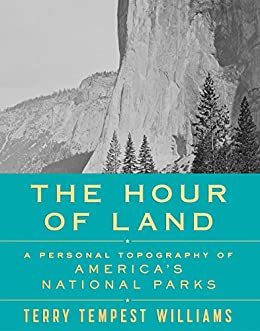
“The Hour of Land: A Personal Topography of America’s National Parks” by Terry Tempest Williams (2016)

Terry Tempest Williams is an environmental activist and writer. She pays tribute to America’s protected landscapes, taking a personal path through 12 national parks and national, the forces that threaten them, and the relationships they forge and sustain between humans, animals, and the natural world. Of herself and the more than 300 million other annual visitors to America’s wild lands, Williams wonders, “What are we searching for and what do we find?”

This book is, to me, imperfect, however her distinctive prose style is capable of conveying a deep spiritual dimension within the physical setting. The work is broadly ambitious but a deeply impassioned collection of essays on a select group of settings within the national park system. Her writing expands beyond recreational parks to include battlefields, monuments, and seashores. Williams reflects on personal ties to locations such as Grand Teton and stretches across the country to Arcadia National Park, where she discovers familial roots going back several generations. Other locations, such as Big Bend National Park and Alcatraz Island, offer first-time encounters. Williams provides well-documented histories of many of these parks, yet a more consistent thread running throughout the book touches on the rapid changes incurred in recent decades, primarily related to the destructive effects of climate change or by the interference and conflicting interests of the federal government and the oil industry. Williams’ message for preserving and respecting these sights is heartfelt, but she has a tendency to occasionally overstate her message, and her calls to action sometimes veer toward rants.
Regardless, mapping these emotional and political landscapes, Williams shows just how necessary the national parks are to this country’s psyche. This is an important, well-informed, and moving read for anyone interested in learning more about America’s national parks.

MOUNTAINEERING STORIES

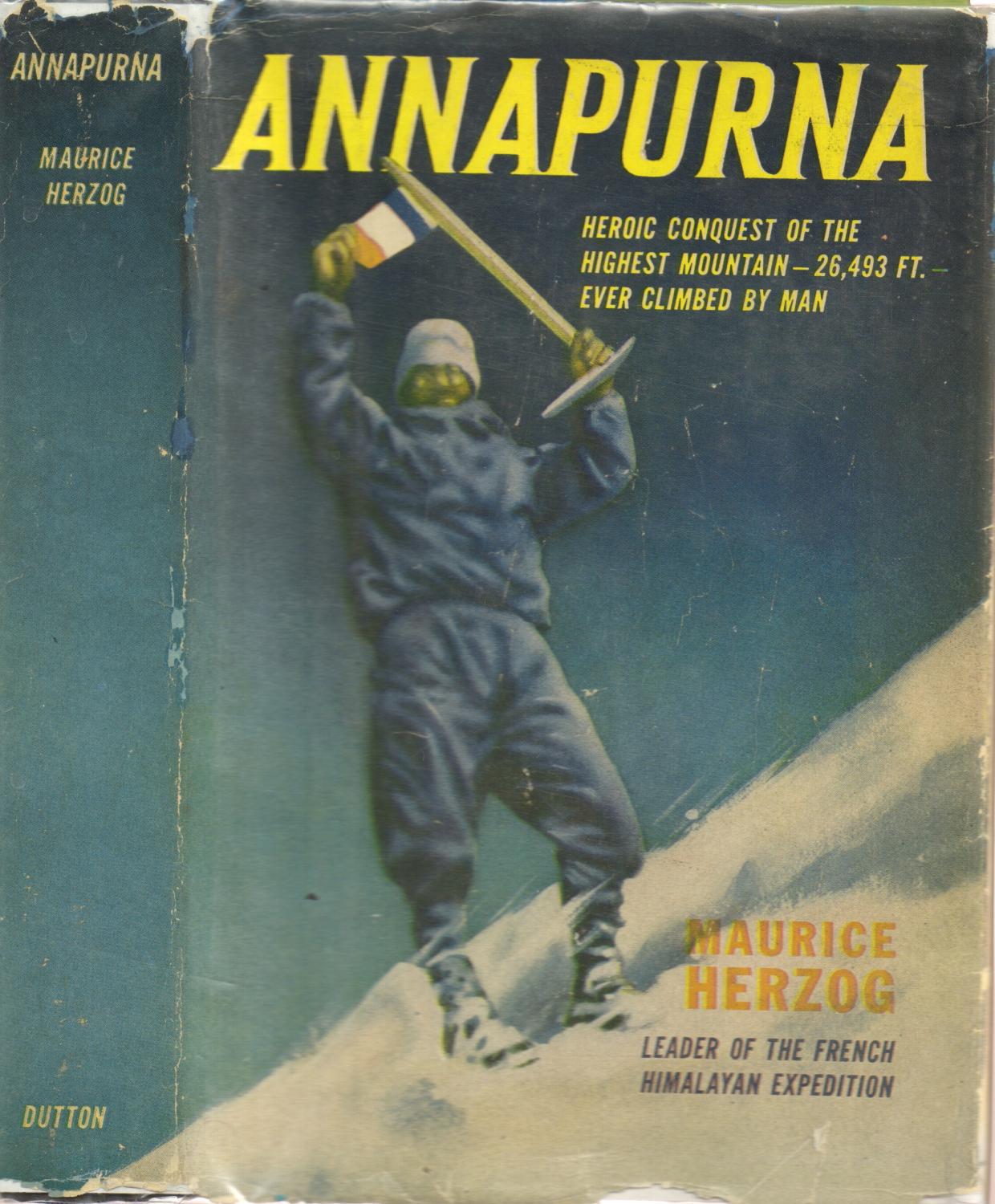
“Annapurna: First Conquest of an 8000-meter Peak” by Maurice Herzog (1951)

My father-in-law gave me a stack of his adventure books last December and amongst them was this gem. Annapurna is the story of the first expedition in history to summit and return from an 8000+ meter mountain, Annapurna in the Himalayas. Though now seventy years old, it remains one of the canonical works in exploration literature as it is probably the best-selling mountaineering book ever written. Written by the leader of the 1950 expedition, French climber Maurice Herzog’s lyrical though somewhat self-serving account explores the hardships of achieving such a feat.

Unlike other climbs, the routes up Annapurna had never been charted. Herzog and his team had to locate the mountain using crude maps, pick out a single untried route, and go for the summit. The following unforgettable account of this heroic climb and its harrowing aftermath includes a nightmare descent of frostbite, snow blindness, and near death. Herzog’s masterful narrative is one of the great mountain-adventure stories of all time though more recent editions may also include diaries of his comrades and depicts an even less romanticized picture of their efforts.

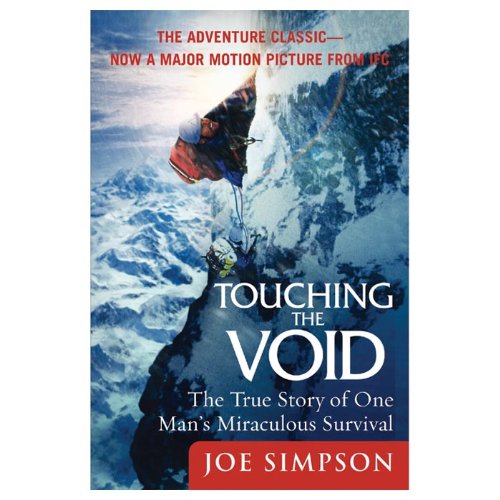
“Touching the Void: The True Story of One Man’s Miraculous Survival” by Joe Simpson (1988)

In my opinion, this is the best survival story out there. Joe Simpson and his climbing partner, Simon Yates were climbing a 21,000 foot peak in the Andes when Simpson suddenly plunged off the vertical face of an ice ledge, breaking his leg. In the hours that followed, darkness fell and a blizzard raged as Yates tried to lower his friend to safety. Finally, Yates was forced to cut the rope, moments before he would have been pulled to his own death. The next three days were an impossibly grueling ordeal for both men. Yates, certain that Simpson was dead, returned to base camp consumed with grief and guilt over abandoning him. Miraculously, Simpson had survived the fall, but must fight his way down the mountain to reach base camp in time.

Concise and yet packed with detail, Simpson’s harrowing account of near-death in the Peruvian Andes, is a compact tour de force that wrestles with issues of bravery, friendship, physical endurance, the code of the mountains, and the will to live.

The book was adapted into a fantastic movie that includes film of Simpson and Yates recreating some of the climbing on the same mountain, years after the incident.

LIGHTHEARTED READS

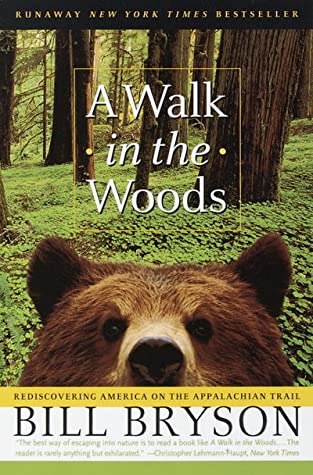
“A Walk in the Woods: Rediscovering America on the Appalachian Trail” by Bill Bryson (1997)

My husband, father, and brother all recommended this book to me. I have never read Bill Bryson before but I’m currently laughing my way through this one. I found it humorous about his misunderstandings of preparing for the hike, the shock at equipment prices, and his smugness on outlasting his fellow hikers on the trail.

Back in America after twenty years in Britain, Bill Bryson decided to reacquaint himself with his native country by walking the 2,100-mile Appalachian Trail. To a writer with the comic genius of Bill Bryson, the long trail provided endless opportunities to witness the silliness of his fellow hikers. Bryson is accompanied by the gloriously out-of-shape Stephen Katz, a frenemy from Iowa along for the walk.

A Walk in the Woods is also more than just a laugh-out-loud hike. Bryson’s acute eye is a wise witness to this beautiful but fragile trail, and as he tells its fascinating history, he makes a moving plea for the conservation of America’s last great wilderness.

To learn more about the current threats to the Appalachian Trail and how you can help, visit The Appalachian Trail Conservancy

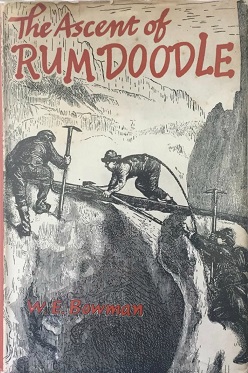
“The Ascent of Rum Doodle” by W. E. Bowman (1956) 

If this, the definitive, oddly obscure account of the conquest of “the world’s tallest mountain” fails to leave you gasping for oxygen from all the laughter, see a therapist. A brilliant set up of self-important peak-bagging gas.

In Bowman’s parody novel, a bumbling group of British mountaineers mounts an assault on Rum Doodle, a 40,000 foot neighbor of Everest. The good-hearted but naive expedition leader, Binder, is accompanied by Constant, the language expert and circus addict; Jungle, the route finder who loses his way to the assembly point; Wish, the scientist; Prone, the doctor, who contracts every form of measles known to man; and their team cook, a Yurgistani called Pong, who is feared by all for his ‘nauseating brews’. They are helped in their ascent by 3,000 porters who not only carry their luggage but often the explorers too. Especially memorable is a homo-erotic wrestling match at 27,000 feet. This is the record of their farcical attempt to reach the summit.

First published in 1956, The Ascent of Rum Doodle received little attention except within the mountaineering world. I first learned about this hilarious novel through John Long’s favorite literature covered in the book Tales From the Steep.


These are all books that I’ve read within the past year – I’ve been on a niche kick. I have several others to list at another time but feel free to ask for specific styles of recommendations in the meantime.

Any other books that you recommend? Leave a comment below!

Shelter-in-place

Well…we didn’t anticipate this. I can’t help but feel selfish to focus on myself in the midst of a global health crisis. What privilege we had to take time off from work and throw ourselves at the universe for a few months of adventure and travel. The irony of the clashing times slaps me in the face every day as the number of coronavirus cases rise. A world pandemic in the middle of our four-month romantic honeymoon when we have no jobs and pay our health insurance out of pocket. The economy is crashing and they say it will “take time to recover” yet a vaccine will not be distributed for at least a year, so where does that put us?

Jon and I are in California. We were planning to be in the Grand Canyon by now but we called off our plans when Jon got a head cold in the Mojave desert and we needed to make sure it wasn’t coronavirus. With more daily contact with the news, we began to reassess our trip.

STAGE 1: DENIAL

We decided to try camping for a few days at a state park closer by and see how that went before making any big decisions. Surely, we could find a balance? We often backcountry hike and camp where we rarely see more than two people in a day.

We chose a location based on our ability to not have to stop at any extra places. Our way in to the Anza-Borrego State Park last week, we got gas and groceries accumulated from regular runs, made sure not to stop at all in towns in between or around the park. While there, we maintained at minimum 6 feet distance from others at all times, even taking detours on trails as needed. We chose less popular trails and used hand sanitizer or disinfectant wipes often (though my stash is admittedly beginning to run low since it was acquired pre-pandemic).

After five wonderful days in Anza-Borrego, we learned that nowadays, a California State Park badge on the side of a truck is all it takes to know that our stint of camping is over.

STAGE 2: ANGER

We aren’t getting direct answers from those in power. We do not currently have a president or executive branch that is telling us what will keep us or others safe. I need to know what the answer is for myself, so that I can determine how to proceed forward in my life without harming others.

If only the hoards of people who visited the park over the weekend had behaved better! We tried hard to be on our best behavior and tried our best to follow all health regulations, why couldn’t others? Do we not have clear enough rules and guidelines?

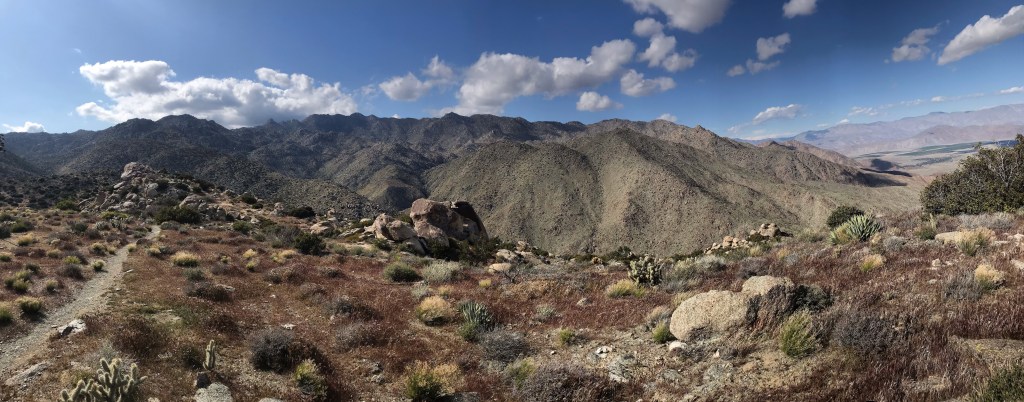
Before I got the news last Sunday, the thrill I got from hiking into the mountain wilderness was so great that I didn’t want to come back at all. As the ranger who delivered the news walked away from our campsite, I closed my eyes to remember following the game tracks around the valley onto a ridge with nineteen hawks slowly soaring a few meters overhead. A slight breeze reminded me of the harsh winds that accompanied the most ridiculous views over the feet of the mountain range which spilled onto a desert basin.

Where else can I go to see the horizon like here – a blurred mix of desert floor, Salton Sea and sky? I have never felt more of this earth than now and I am not ready to part with that feeling.

STAGE 3: BARGAINING

Going back to work wouldn’t completely tear me away from that feeling but it would make it less than the plans we had to continue on for two more months. This was our dream trip and we are heartbroken. We were fighting for bits more pieces, but trying to be conscientious of the situation at the same time. Is there balance to continue our trip? Is it possible? And conversely, will there be a job market afloat in a month or two? Are we endangering people by continuing?

The panic and pain of the reality began to hit me after we got the news that California State Parks are now closed: How do we ingest this? Where do we go? Literally, tomorrow? After that? Can we plan out any further than a few days before another thing pops up? Do we apply for work? Is our trip over?

Could Jon and I keep going by only visiting parks during the weekdays so that others can be open to use them on the weekends? Will there be places where backcountry camping will still be allowed? How about National Parks instead? If we made some adjustments to our packing, we could carry more water and food supplies and not have to stop the car for even a further distance. Then we could maybe go out still to Yosemite or Death Valley?

On the ride back to our temporary home base (my parent’s place), I began reading about the closures at national parks within a safe distance. The lists were extensive and closures indefinite. I began wondering what park officials would say if I asked the dreaded question: “Can we keep searching for camping or are we being irresponsible?”

STAGE 4: DEPRESSION

The state park ranger last night was a sweet man, though he delivered the news of the closure of all California state parks he answered our questions with great sensitivity. He’s doing his best to protect people so I didn’t want to cry in front of him. I held it in until he drove on to the next site.

STAGE 5: ACCEPTANCE

I’m still working on this one, please check back in later.

We could chase wind, jumping from camping spot to camping spot, hoping to not see another park ranger. We could continue with our dream trip. We could even wait it out a few weeks to see how some dust settles. At the end of the day, we mostly don’t want to be in any way related to the spreading of this ugly virus. On the ride home from the state park yesterday, we decided that we have two choices: we can either wait until some dust settles to see what comes of the situation or we can kick ourselves out of our trip and find meaningful work, stability, and return sometime in the future.

We have decided to head north towards Oregon probably next week. We’re beginning to apply to jobs, hoping that we can still have some outdoor adventures as we embark on that process as well. We’re grateful for the time we had and though it’s painful to part from it, the parks will still be there when this is through.

We are sticking around southern California for a bit longer since my childhood dog, who is now 16 years old, is very near the end of her life. We are mourning our plans for the rest of our trip, celebrating the life of our sweet family dog, and hoping for a brighter future for the world and our country.

I hope that you reader are happy and healthy. Please remember to be responsible during this time in order to not spread the virus.

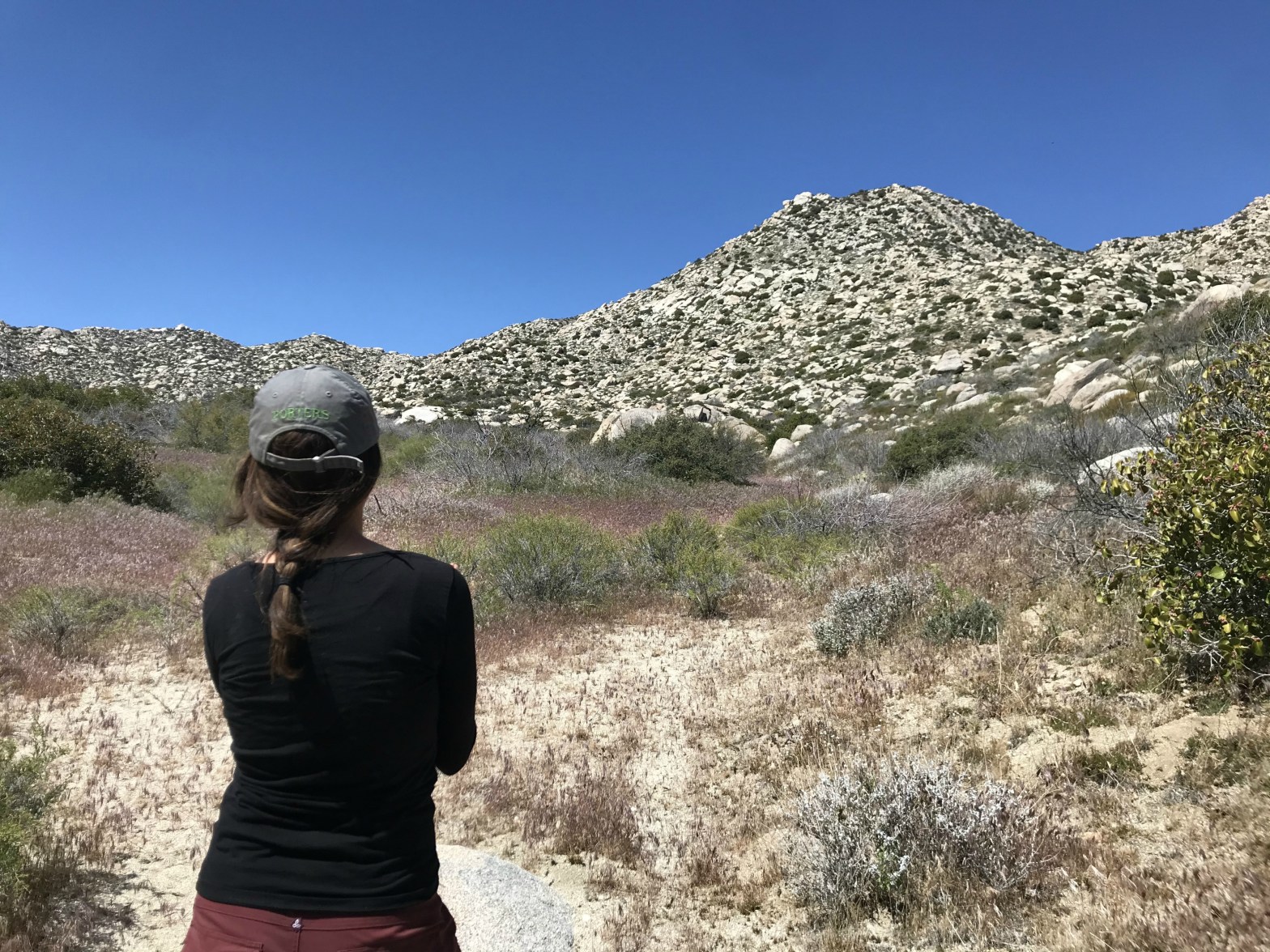
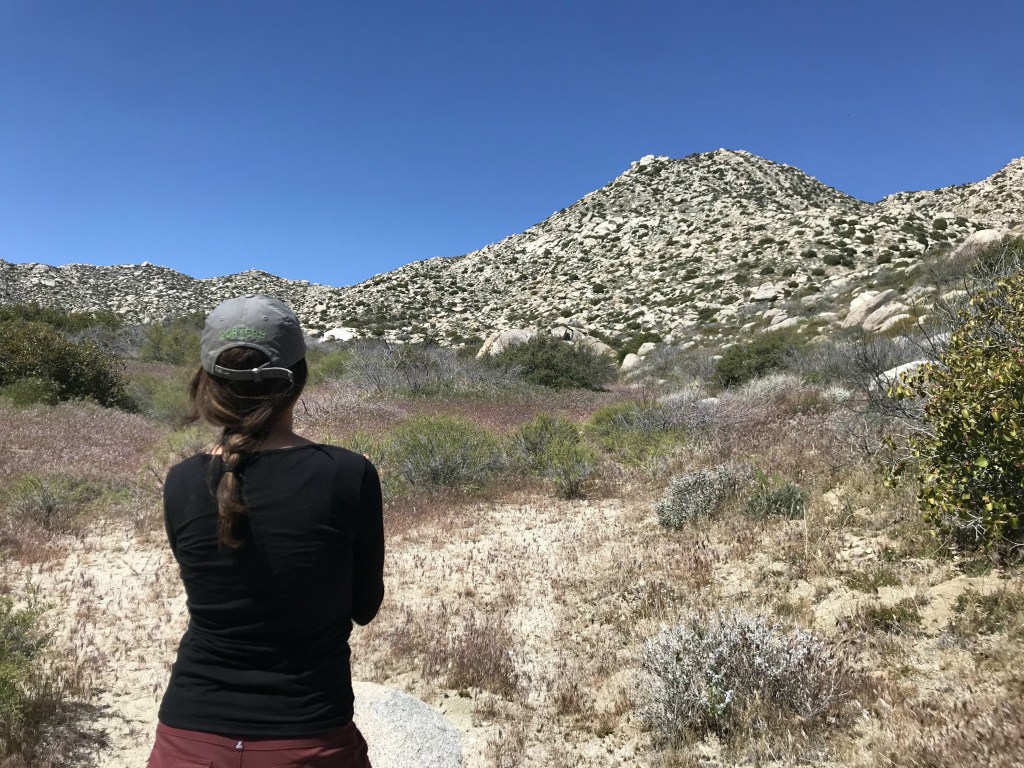
Looking at Chimney Rock on San Ysidro Mountain in Anza-Borrego State Park

Any thoughts or opinions? Or perhaps you would like to share a bit of how COVID-19 has affected your life? Please leave a comment below, I would love to hear from you.

If you would like more information on your own outdoor recreating, see this great post about how Colorado’s stay-at-home order applies to outdoor recreation: https://theknow.denverpost.com/2020/03/31/colorado-stay-at-home-order-outdoor-recreation/236410/?utm_campaign=socialflow&utm_content=fb-denverpost&utm_source=facebook.com&utm_medium=social&fbclid=IwAR1760r7dz-3ay0DHOtnlyfdB-3BAmlesshDxWGyCID9csGsWHiCWRCB4ag

White Sands

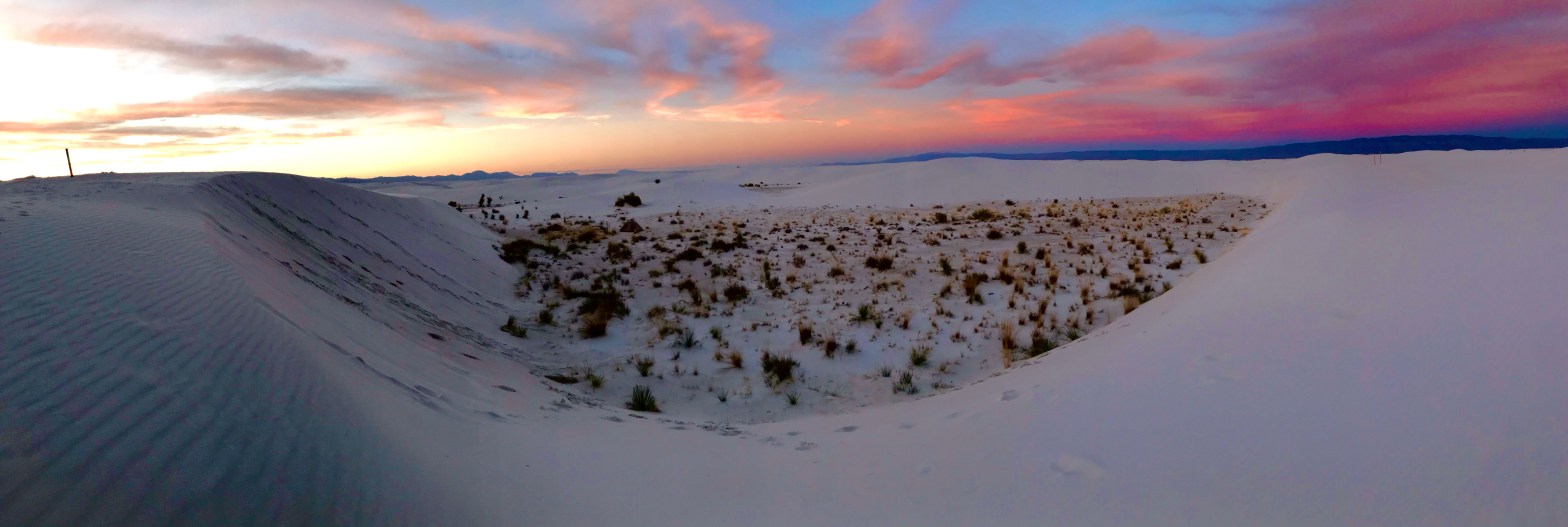
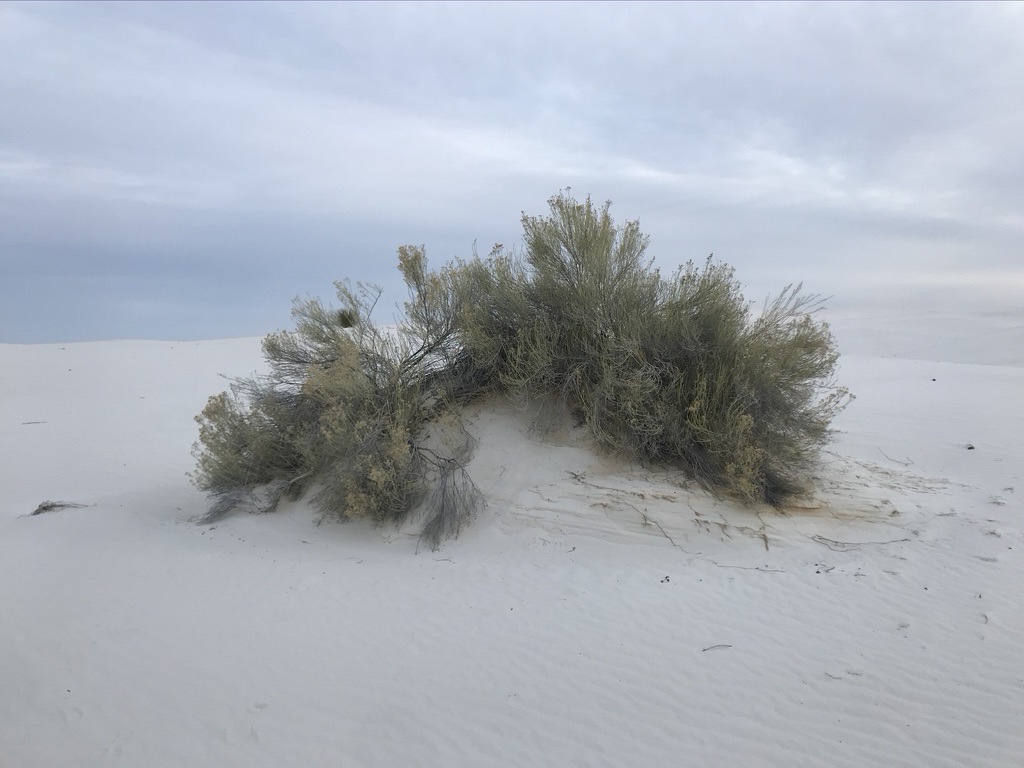
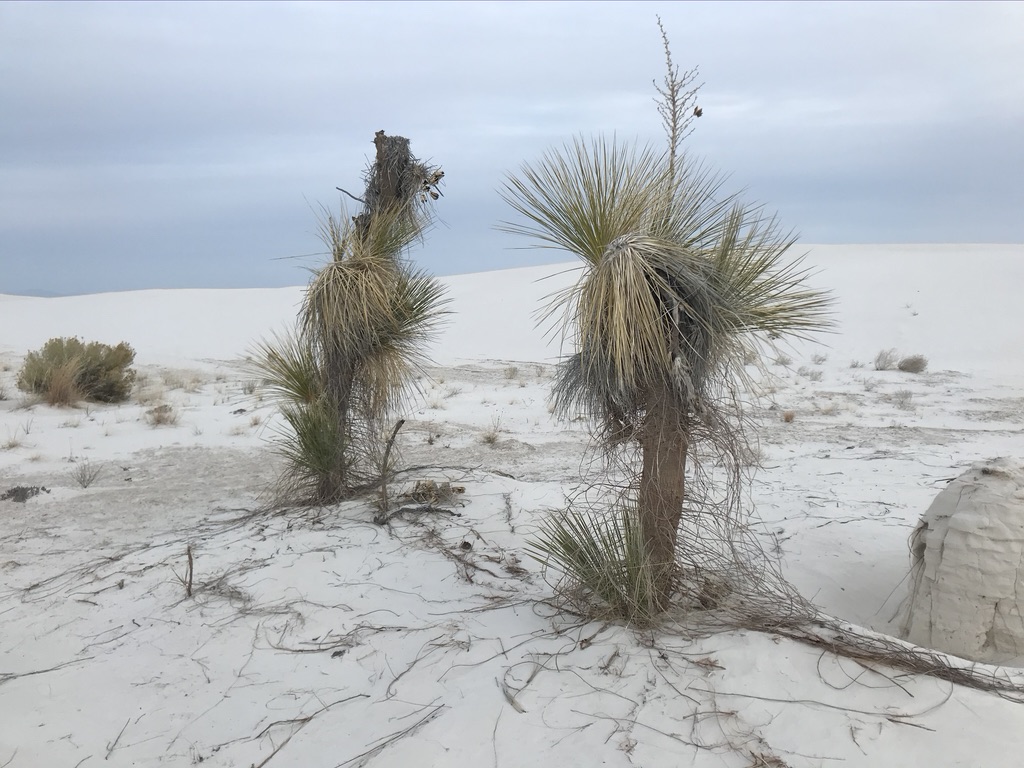
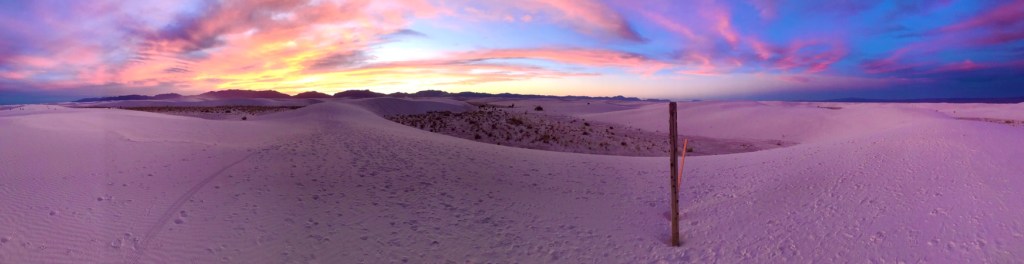
The sandy desert amidst a mountainous valley. Great wave-like dunes of gypsum sand engulf 275 square miles of desert, it is the world’s largest gypsum deposit, a gigantic dune field. Rising from the heart of the Tularosa Basin it is a bizarre landscape – unexpected glistening white sand in New Mexico. It is quite possibly the most underrated, unheard of, surreal, and unappreciated national park in the US.

White Sands National Park used to be a National Monument, up until last December when it was declared a Park. I’m not entirely sure of what this means for them but they certainly operate differently than any national park I have been to.

Before visiting, we checked the NPS website for planned closures because White Sands Missile Range surrounds the park and performs regular testing in the area. For public safety, the park and US-70 are subject to closures during missile range testing. Closures typically occur about twice a week and can last up to three hours.

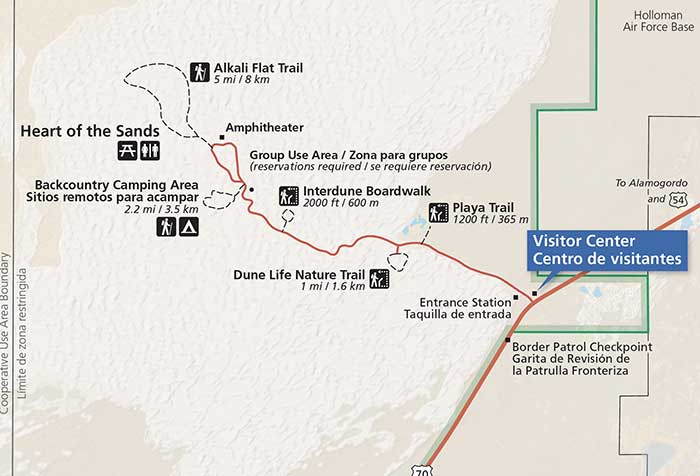
We arrived at the visitor center in the afternoon to reserve a campsite (they only accept in-person reservations) only to find a paper sign taped to the door telling us to go to the park entrance gate to reserve instead. There are only 10 campsites and all are first-come-first-served. There, a frazzled ranger was answering phone calls, getting entrance fees from another car and then handing over our camping forms. He gave us a comically poor map of directions to our campsites – it looked as if it were made in Microsoft Paint (sorry, forgot to snag a photo!). We got little direction besides this minimal map and some advice:

“The dunes are constantly moving,” the Ranger explained “so there are no paths to follow. There are marked sticks in the ground for you to follow. We have to constantly move the sticks as the dunes move. You are not allowed to hike after dark or in a sand storm as you will likely get lost. There is no water or reception – please prepare accordingly. Keep a reference point on the horizon, since it’s easy to lose your way out in the sands.”

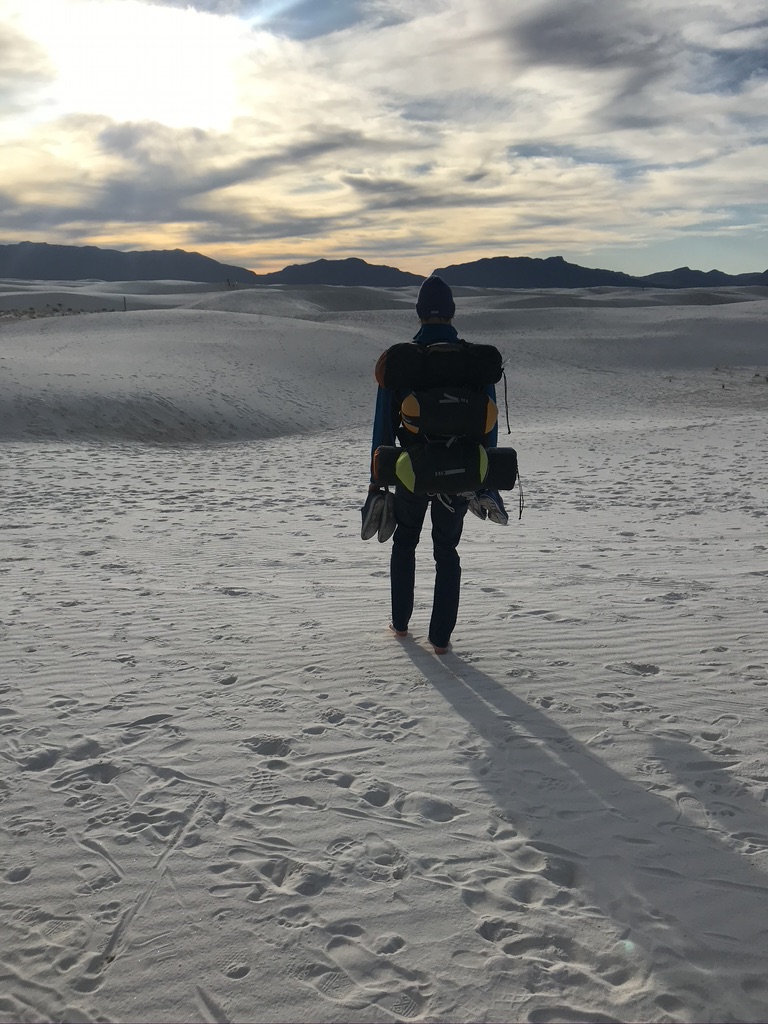
He took our payment and signed forms, closed the window and went off to answer more calls and deal with the accumulating line of cars. A few miles down a paved road we began driving on a compact gypsum road. Even in February, the beating sun was shining off of the dunes with fierce blinding ferocity. We arrived at the backcountry parking and got out, tentative of how it would feel on our feet. Instead of burning our feet, the sand was cool to the touch and silkily smooth. After walking in circles and debating where to enter the dunes, we took off our shoes and tentatively headed out into the abyss without sight of the directional sticks.

With the sky overhead a soft blue and the silent sprawl of the gypsum dunes blanketed out to the horizons like clouds rising from the ground, White Sands National Park sprawled out as an alien landscape in the middle of nowhere. The dunes seem to roll out to a mountainous horizon but between here are there all perspective, color, and sound becomes amplified and distorted in a sense of wonder. With nothing to absorb sound, the merest whisper reverberates far over the neighboring dunes, making the sounds of children sledding down the gypsum sides an unknowable distance away sound as if they were within arm’s reach. Like sound, all orientation is lost out in the dunes.

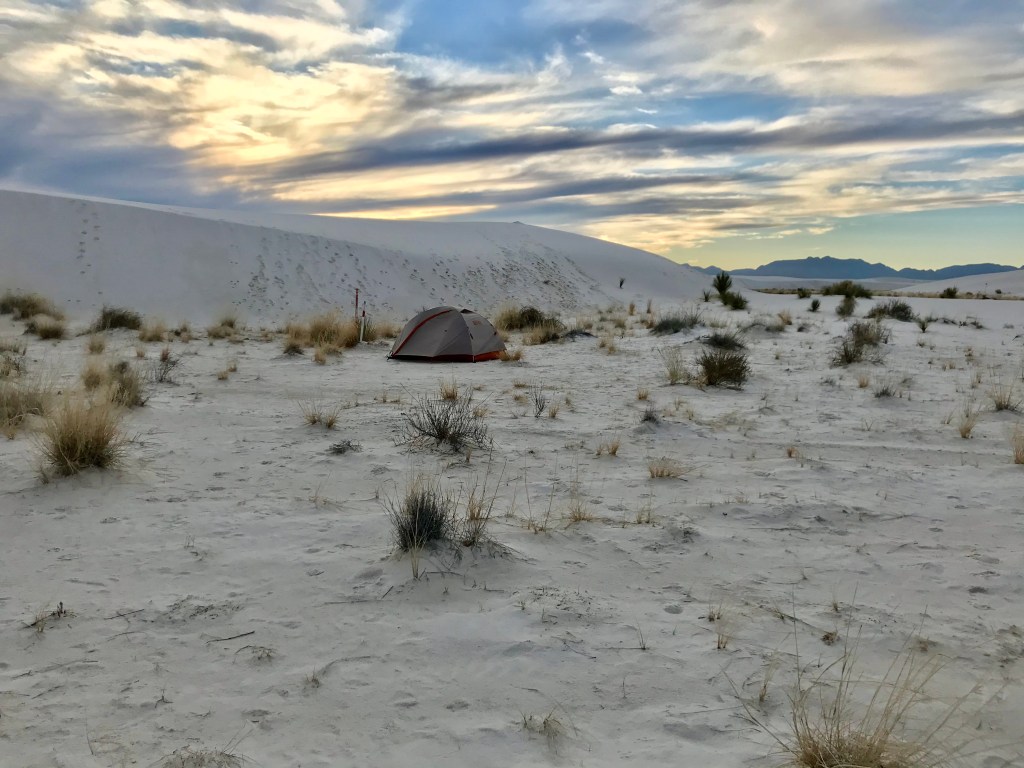
We were happy to soon find the first post in the ground. Carrying our backpacks, we plodded across the tops of the dunes and surfed down the crumbling sides for about a mile and a half until we came upon the post with our campsite number. Down into the flats we went, soon we found ourselves walking across a more compact surface and looking for a spot to pitch our tent among some grass and short palms.

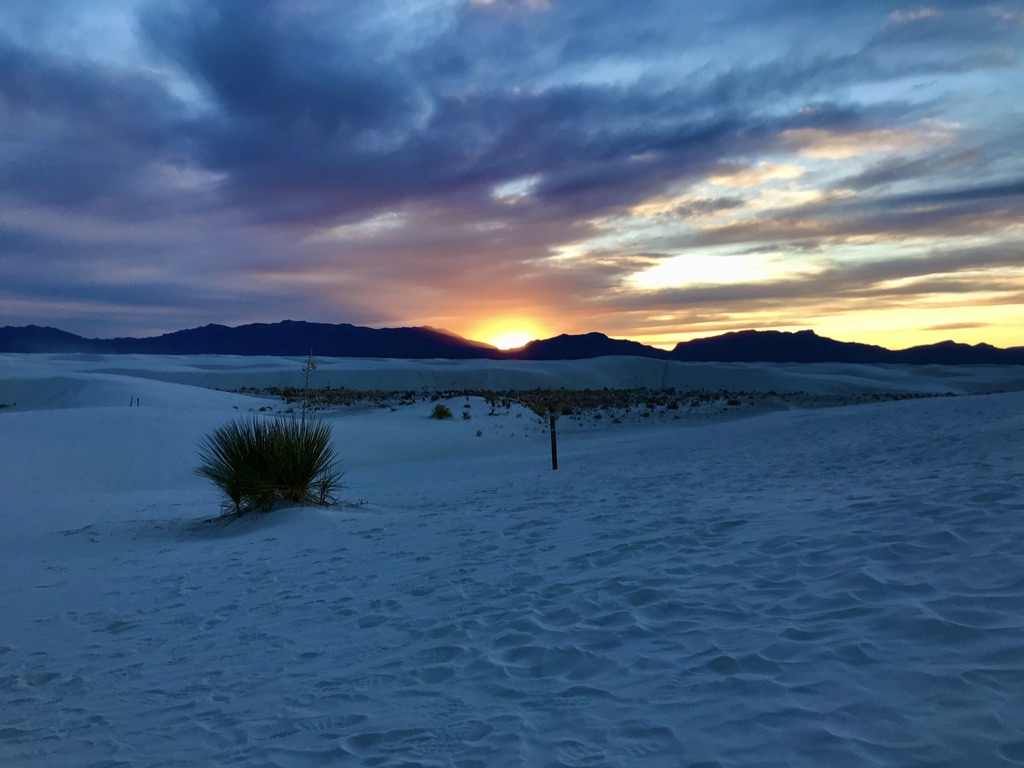
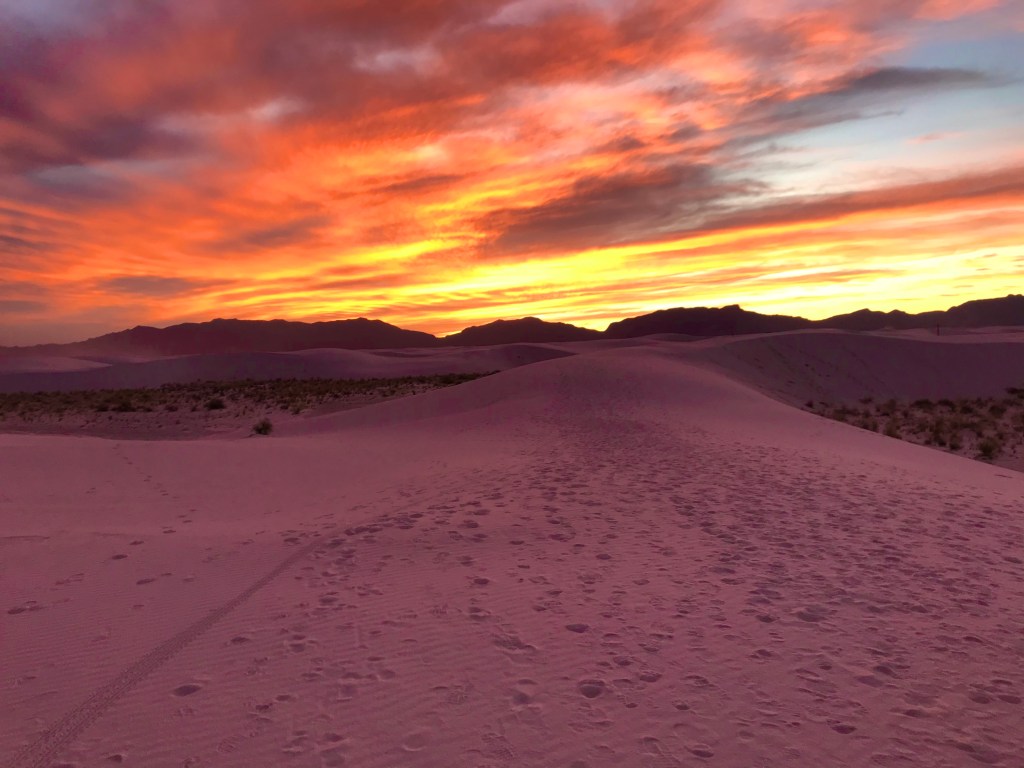
Soon enough, the clouds began to roll in and the sun began to creep behind the mountains. We grabbed our dinner, some water and extra jackets before setting out to the highest dune we could find. The orange sun set perfectly into a dip of the hills and began a phenomenal light show. Eventually we could barely eat because we were busy gaping at the colors all around us.

We enjoyed the park so much that we decided to stay a second night. Going into Alamogordo, the closest town to White Sands, was not much to write home about except for the wonderfully nice people that we encountered. Having not showered for six days at this point, Jon and I decided to stop at a truck stop for one of their inexpensive showers. A surprisingly lovely experience with top notch facilities, fresh towels and a very sweet attendant, we were refreshed and socially acceptable for restaurants. We grabbed lunch at a spot in town before heading up to the nearby Lincoln National Forest. I had heard good things about Cloudcroft, a mountain town not too far away so we ventured off to drop by the main strip, enjoying the small shops before coming back to White Sands.

Having grown up in the northeast and having lived in Texas for the past three years, I missed the thrill of sliding down hill. Back at the park, I rented a sled from the visitor center gift shop and hit the slopes! My legs were wobbly when I returned the sled a few hours later.

The whole experience leaves me wondering if perhaps some of the best parks this country has to offer are the ones you may not have heard of.

 FUN FACTS: 
  • The White Sands National Monument is made up entirely of gypsum crystals that form dunes that stretch over 275 square miles.
  • The site of the first atomic bomb detonation is located on the northern boundary of the National Park
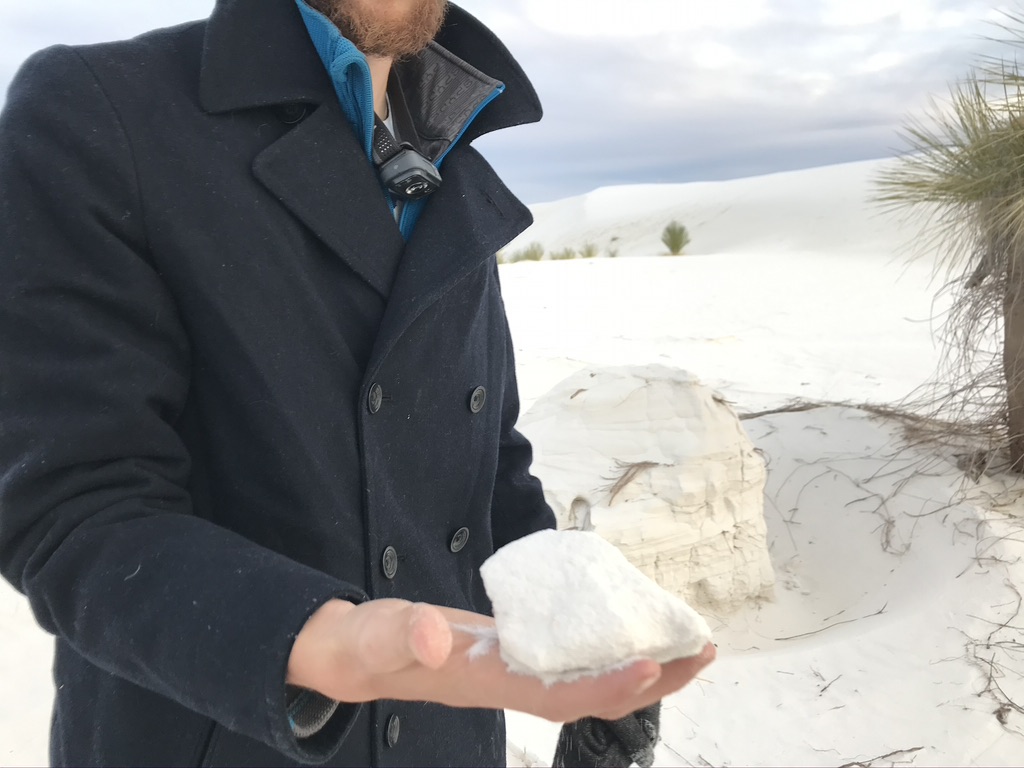
  • Gypsum, what makes up the dunes is actually a clear substance. The dunes appear white like snow because the gypsum grains are constantly banging into each other. The scratches then reflect the sun’s rays making them look white.
  • Gypsum doesn’t absorb heat from the sun, so even on the hottest day of the year the dunes are cool and comfortable to walk on.

Diaries of Big Bend Backpacking: Day III

I wake before sunrise to find that the water bottle in the tent is empty. Jon drank the remaining water in the night. We have only 10oz left and so we make the decision to head straight for the visitor center to refill. On the way, we pass the campsite we reserved for the third night. It was another large and beautiful spot with great views. By daylight, we are running into individuals or groups every 5 minutes and we brace ourselves for more noise and congestion. We bemoaned an unexpected trail reroute that added a distance but finally arrived at the trailhead, parking lot, then water fountain. Water fountains are such magical and wonderful things. Having unending water was truly wondrous. We drank our fill and sat down next to the fountains for breakfast. We drank more water, ate, chatted with passerby and checked the map.

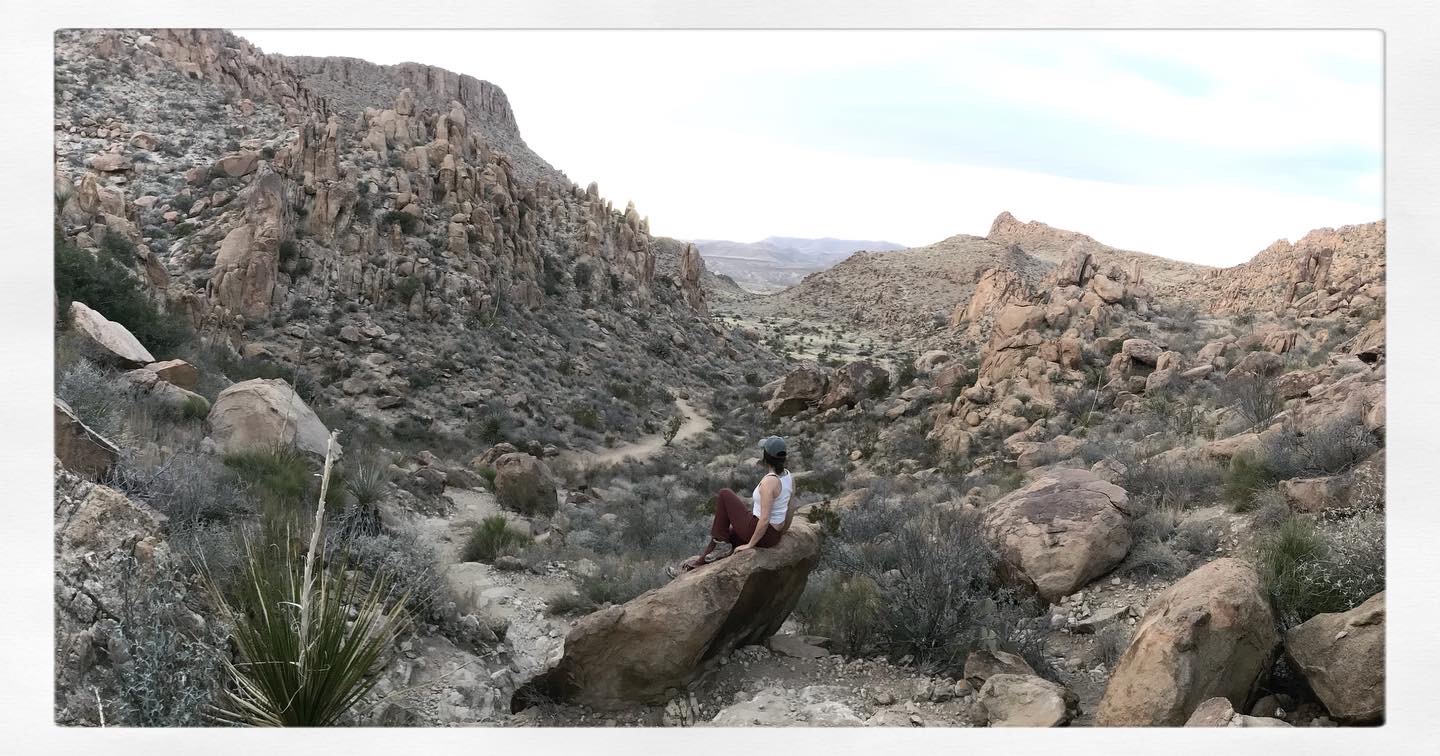
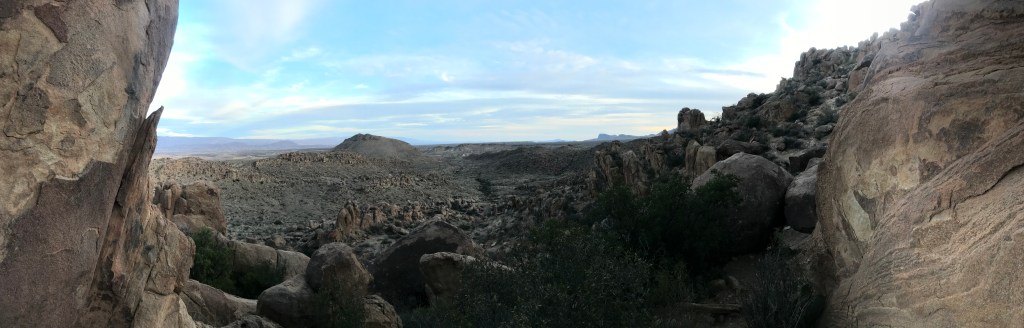
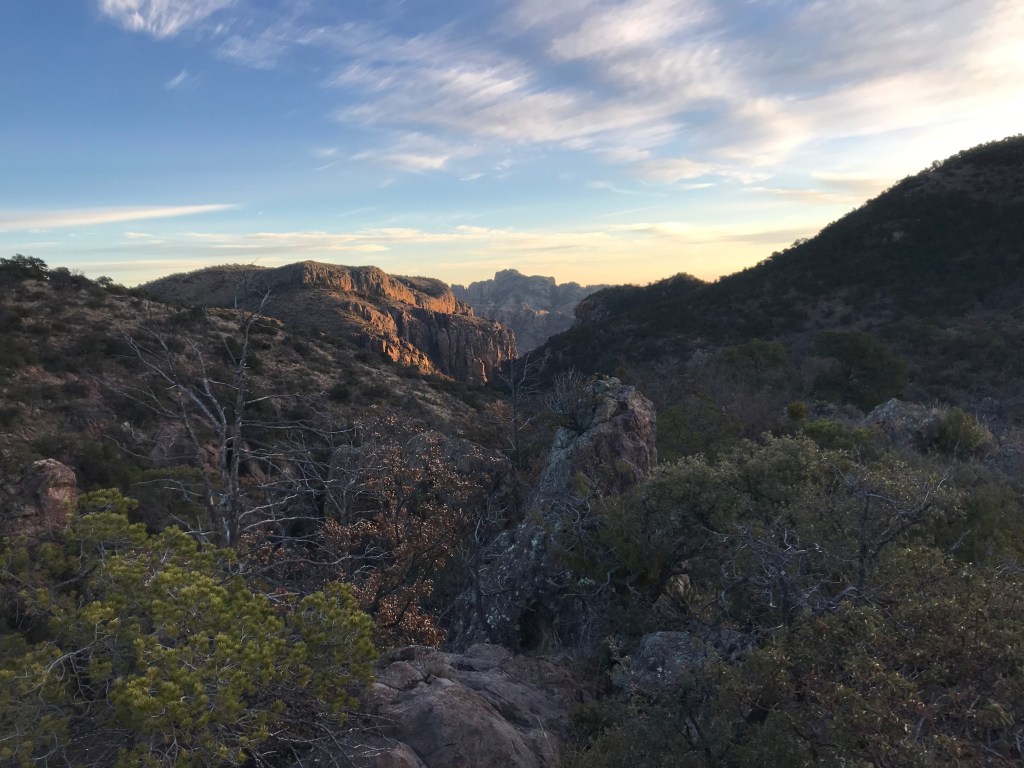
Somehow among this time we decided to set off for new scenery and activity. We repacked our things and set off out of the Chisos Mountains and across the street to Grapevine Hills. We heard of good bouldering in that area so we brought our crash pads with us. We took another quick 2 mile hike out to Balanced Rock, where the landscape was dramatically different from the forested mountains. It was boulder heaven!

We had a hard time finding the boulder routes that we wanted – the climbing app Mountain Project was useful but the area was generally disorienting. It was like finding a needle in a haystack!

Eventually, we found the area we were looking for and began climbing around. Another couple came for trad climbing and we cheered them on as they played in the tall crack systems. Moving in the weird ways that climbing gets you into felt great after just walking for two days so we climbed until it got dark.

We made it back to the campsite and fell into a hard sleep, having eaten only peanut butter and apple. We were so tired, we just fell off into a deep sleep.

Diaries of Big Bend Backpacking: Day II, Part II

January 16, 2020

The leaves crunch as I set my pack down. It’s cooler here, a quiet forest inside the canyons of the Chisos Mountains. I pull out a small ziploc bag of trail mix and climb up a massive downed tree up to the top of a tall boulder in the middle of the dry creek bed. The sun feels soft and warm on my skin. The air is the perfect crisp and there is little breeze in this protected area. Not long after, I see a pair of big eared deer curiously making their way towards us. They pause and we acknowledge each other but they surprise me by not moving. As if they are sizing us up and hesitant to make a move. Jon hasn’t noticed so I whisper to him. We take turns looking at each other and then at the deer. Nothing changes, no one moves. I wonder if other hikers have fed them before – would that explain this behavior? I have enough time in this interaction to take out my phone and take a minute long video. Then I went on munching my trail mix and Jon back to his writing. They stayed to watch us for maybe five more minutes before other hikers showed and the deer finally scattered away.

We had only five miles between camps today and to our relief, most of it was downhill. Disappointed by the lack of flowing water to filter, we continued on rationing our water supplies. We reached our campsite by early afternoon, setup camp and decided to go out on another hike. By 2pm we had a smaller pack setup and were off on another 5 mile roundtrip hike to the 7,825ft top of Emory Peak, the highest point in the park. I was busy taking in the views near the top when Jon pointed out a large crowd coming down the trail carrying a woman.

Her leg was splinted with two hiking poles and some ace bandages. A dozen or so people were helping maneuver her down the steep and rocky trail yet I never saw her wince, cry, or yell. Was she in shock? We approached the group, offering our medical supplies. The very end of the trail to the peak, we learned, was a bouldering rock scramble with a good amount of exposure. She had slipped on her way down, fell about 6ft, and broke her leg. Luckily, there were several people at the top and they banded together their supplies and strength to begin moving her down the mountain. Emergency services were already called for and they had two park volunteers assisting them already. I recognized one of the volunteers as the woman who checked our permits just that morning. We helped maneuver her through a particularly tricky section and I offered her some humor. (i.e. “Imagine your favorite food in the whole world. Not the powdered eggs that you have back at camp! A burger, fries, and a shake…whatever you want. Now you KNOW you are going to get that the first chance you get. Heck, you’re can just ask one of these dozen minions you’ve got at hand right now to go through their stocks and you could get hordes of chocolate!“) She had a long way down and they weren’t making ground very fast over the difficult terrain. If she was in shock, the pain would eventually start kicking in. I whispered to the park volunteer if they had managed to get any painkillers for her – they had. Once past the tricky section, we were more of a crowded hinderance and decided to continue on our hike and return to them to check in on our way down as we would surely pass them again at their slow rate. The injured woman calmly but sternly warned us to be careful on our way back down the hike.

I was a bit spooked on the surprisingly exposed and difficult scramble up the boulders to the peak. At the top, Jon wanted to sit and write for a good long time amongst the beautiful 360 degree views but all I wanted to do was plan the route down to solid ground. We saw another couple attempt to climb to the top but after a few failed struggles (even after I yelled down to tell them the easiest looking route), they settled for the views from below the tree line. They watched me take the easy climb back down which to them apparently confirmed that it was too treacherous to go up. I looked at them then back at the wall and on the contrary decided that it was not a bad climb. I consoled them by explaining that my husband and I are rock climbers so perhaps we are more accustomed to heights. I felt more comfortable and confident only through the comparison and I was grateful for their presence.

Back down the trail, light was beginning to fade as we reached the injured woman again. Her stoic, stone face surprised me. “She’s one tough cookie” I thought to myself. An emergency responder was with the group, as evidenced by her neon orange badge and clear control of the situation. We were on a narrow ledge portion of the path so she had the group move the woman towards the mountain while Jon and I balanced-beamed across the edge to pass. There was much less chatter and we didn’t stay long to impede their progress as the responder immediately set off ordering movement. They were only a three quarters mile from major trail intersection which would be much simpler a trail in the dark. Jon and I continued down the trail. There’s a one mile portion down a steep face of the mountain with over 1,000ft elevation loss. We had already hiked down the harsh switchbacks that morning to our campsite, then back up them in the afternoon for the additional hike. As we descended, I couldn’t imagine the fatigue of getting that woman down this section in the dark. Before I could decide to stay to offer my own strength to the team, a group of emergency responders appeared around a switchback. Panting heavily, they were carrying a fabric stretcher with a huge rubber tire. We explained the location of the injured woman and crew, not much further along. Relief washed over their faces as they learned that she was in fact not still located at the very top but over the past few hours they had managed to get her through the tricky rocky sections and almost at the main trail. Getting her down this steep section would already be hard work for the crew. We parted ways and Jon dreamt up a life of being a park ranger.

Back at camp, thirst kicked in. I felt as if I would throw up as I force fed myself some dinner. A headache set in and much to Jon’s dismay I decided that I needed to drink 16 oz of water. He got his revenge by drinking the remaining 12 oz in the middle of the night. I woke in the morning upset to see my water bottle emptied. We have maybe 10oz of water left in his hydration bladder for all of tomorrow.

Diaries of Big Bend Backpacking: Day II

February 15, 2020

Hiking socks make my calves look fat! It’s a seriously not cute overall look for my short legs. The hiking boots do not help. All clunky and chunky – my entire legs look stubby. There’s a fly that really likes sitting on my socks and watching me write. I haven’t showered in two days which isn’t much expect for the harsh sweating I did yesterday. We forgot deodorant so we’re trying our best not to lift our arms above our heads. Camping and hiking isn’t always pretty.

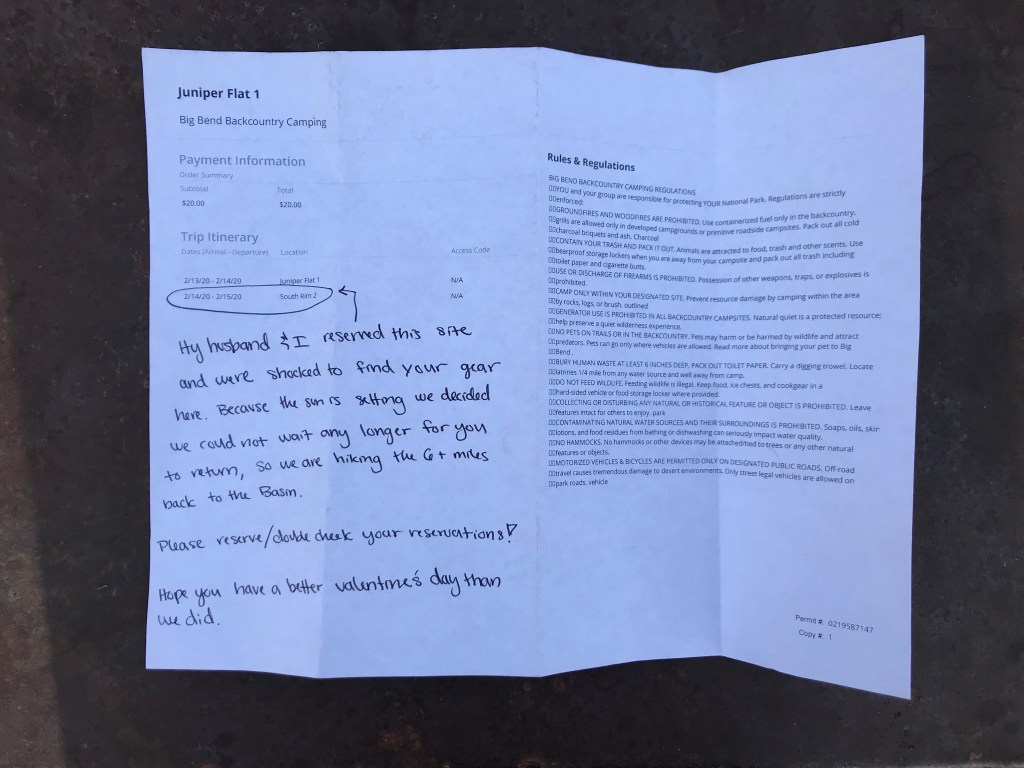
We returned to camp last night to find a handwritten note in our bear box. For a moment, I smiled, thinking it may be a random act of Valentine’s Day kindness. It wasn’t. It turns out that someone else also had our campsite booked. They wrote a note on their reservations sheet for us.

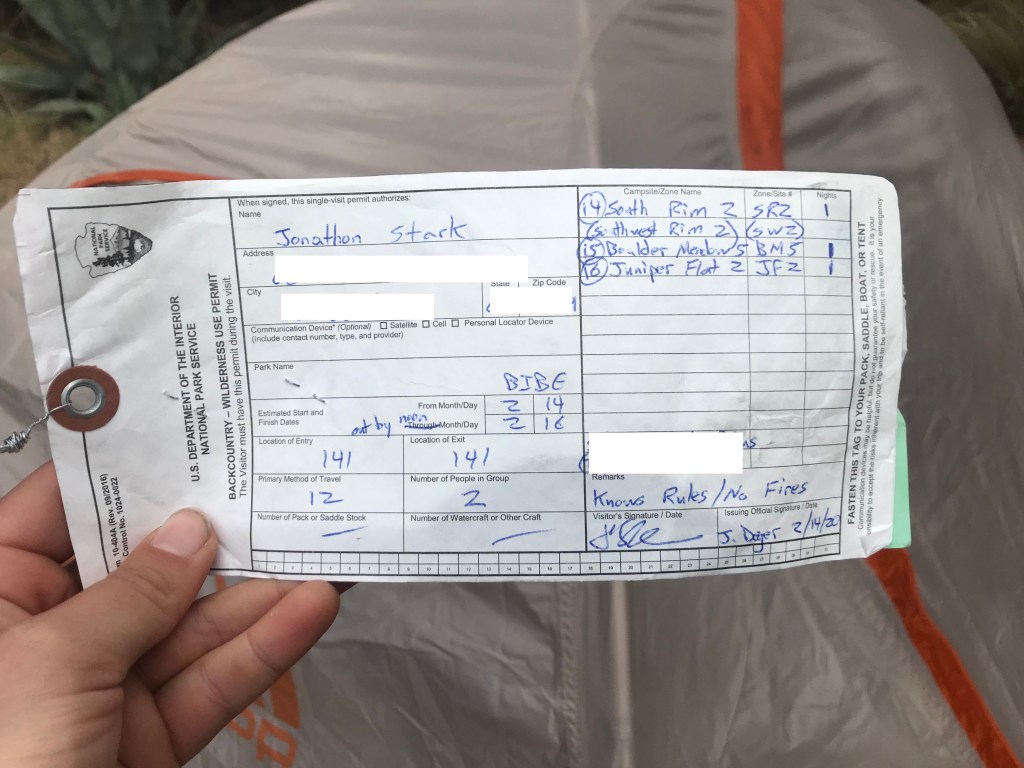
I wish that I had left our permit out (with the campsite number booked and written in by Ranger Jason) so that they could have seen that the site was double booked but it sat inside my bag in the bear box out of view. The couple assumed we either didn’t have reservations or accidentally took the wrong site. Regardless, while we were enjoying our Valentine’s celebration out at the South Rim until dark, eating dinner and chocolate, casually making our way back the two miles to our campsite this unfortunate couple made the decision to hike over six miles back to the parking lot. Though I know that it’s not our fault, it bugs me that they think it is and that their Valentine’s Day was ruined. The reservation slip they left has a permit number on it and I hope we or the park services can reach out to them and explain the double-booking. I certainly would have shared the campsite if they had stayed…(UPDATE: after speaking with park volunteers, I found out that Big Bend has a brand new website launched in February for booking backcountry campsites and there were several incidents of double-bookings and other issues occurring because of it).

We had a windy, cold night but stayed cozy and warm inside our down sleeping bags. We didn’t set alarms and instead woke when the sun came up. About ten hours of sleep rejuvenated our tired bodies. A small cup of cold coffee protein shake, a bag of coconut and dried blueberry oatmeal (with powdered milk and water), and a gorgeous sunrise over the canyon left us feeling reset and ready for a new day.

Late sunrise views from our campsite

It’s our dating anniversary today. Eight years ago today, Jon and I decided to finally go on a date to a normal New London restaurant to try going from being friends to being in a relationship. Honestly, our first date wasn’t very memorable. We were already good friends and it was like going to dinner with your best friend. We sat on the steps of his freshman year dorm afterwards until partiers started to interrupt our chatting. He kissed me goodnight and I walked back to my dorm with some friends. It wasn’t until our fourth date that we felt the “big click”. We refer to it as “the perfect date” but in reality it was just a good example of how we work. Playful, goofy, we were teenagers then and inspired childlike fun in one another. We built a fort out of blankets in my dorm room, shared our favorite music, watched a movie, and shared delivery food with my roommates. Somehow we still have this goofy fun together and camping can still feel like that makeshift college date.

Jon is working on his watercolor paintings again. We’re back on the South Rim at 10am. I’m still thinking about the couple who had the double-booked reservation and hoping that they turned out alright last night. I try to focus on Jon’s painting technique instead. He always surprises me with how talented of an artist he is. Watching him makes me want to paint too. I miss my acrylics and oil painting but I’m glad I’m exploring writing more now too. It’s strange feeling words spilling out and letting my first thoughts hit the paper without much reservation. Graduate school drained most of my artistic energy. It took me over a year to get into reading again and when I did, I wanted only to read books for fun. I’m so glad that happened because I have greatly enjoyed a series of somewhat connected books about outdoors adventures. Those books in a way gave rise to this trip and my new voice for writing. Though graduate school was not a very pleasant experience, I am grateful for having found more of who I am and begun a process of detaching myself from who I thought I needed to be or who I was told to be. I certainly do not know yet what to do with that or where to go from here but in the moment it feels great.

Diaries of Big Bend Backpacking

February 14, 2020

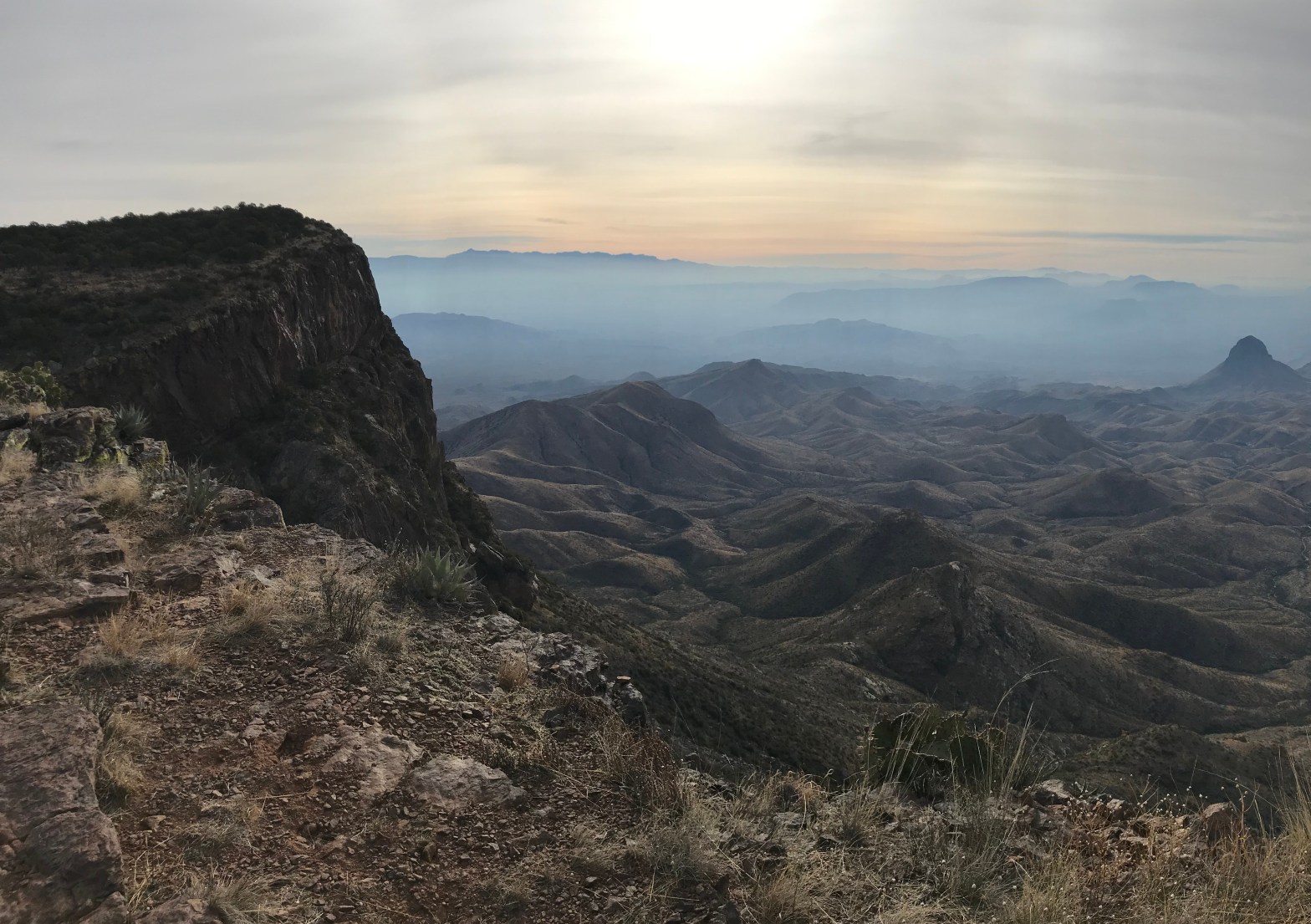
My head hurts – it’s throbbing a bit. The view is amazing though. Carrying anymore water up here would have added a significant amount of extra weight that my back could not have taken. I have three large water bottles. Had. I drank one on my way up here. Ranger Jason recommended 3 liters per person per day. I have 3 liters for myself for three days and have to conserve it because there are no natural water sources out here. The wind is cold despite the desert views and bright sun. We’re at 7,280ft elevation, on the edge of the South Rim in the Chisos Mountains of Big Bend Nation Park. More specifically, on a small unmarked trail that was recommended by Ranger Jason who was also a big help in securing us three days of primitive campsites along the trail despite our lack of reservations over President’s Day weekend.

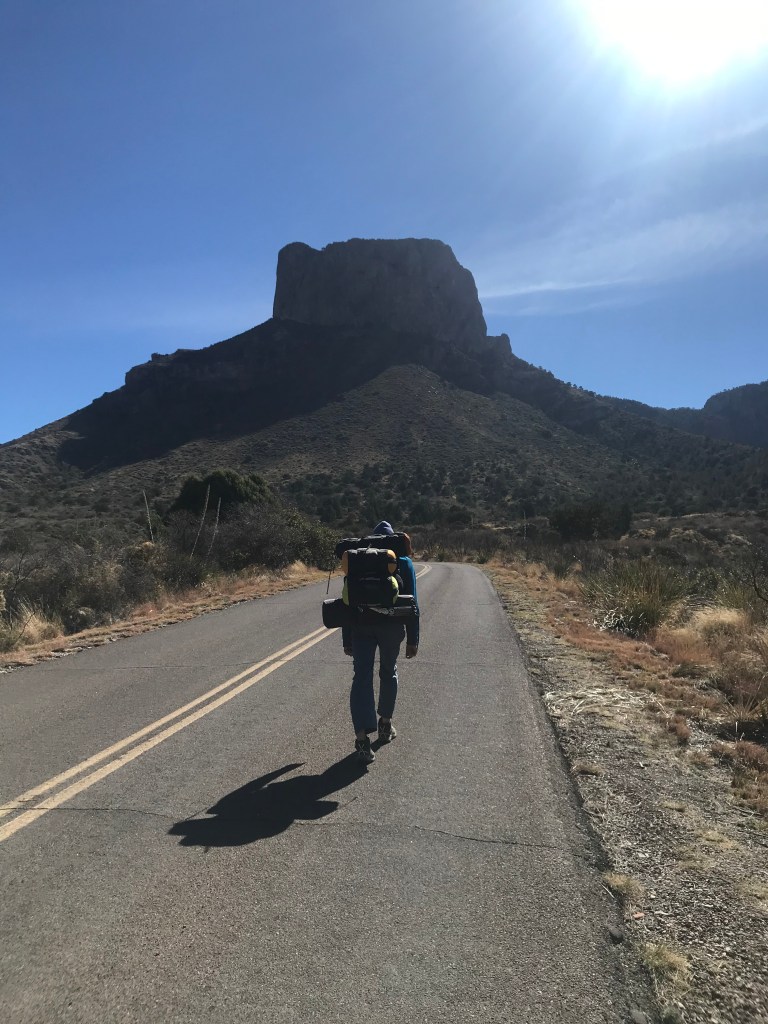
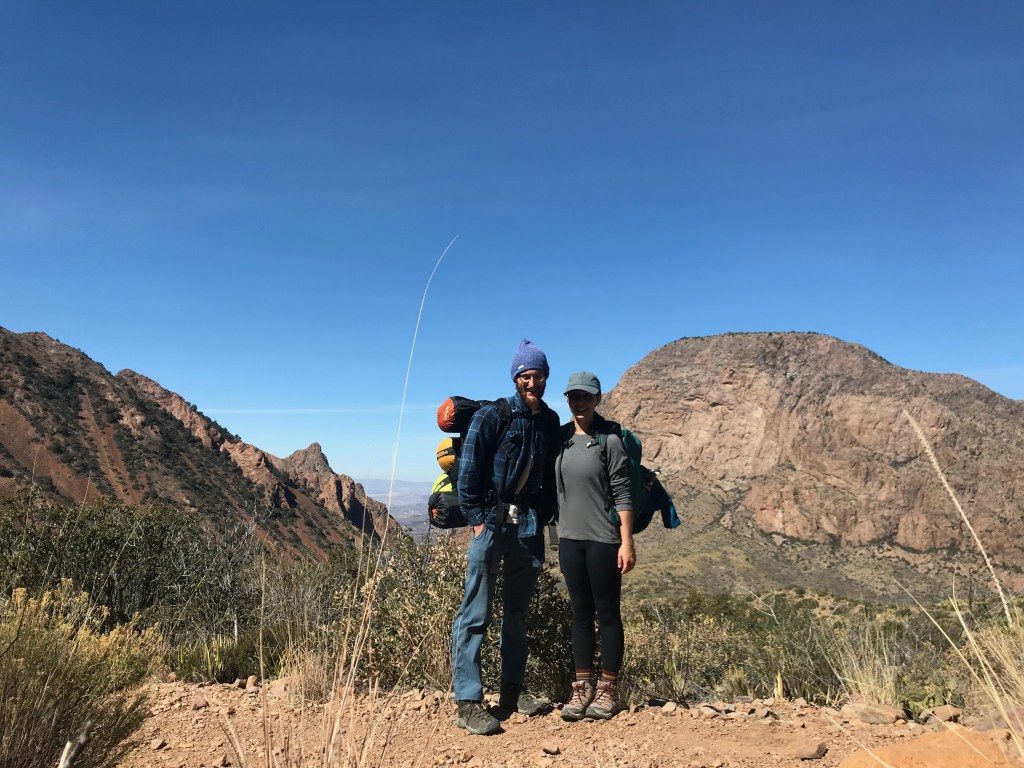
We have this great campsite along the South Rim trail (SM2) with a bear-proof box in what I refer to as our “living room” and then our “bedroom” is several yards away and already set up with our tent. I tucked my pack into the bear box as well since we wanted to hike out until dark. We took a much lighter bag for the evening as the hike in was particularly difficult; switch backs galore! It may have been due to our afternoon start but we only saw people coming down and not a single other person climbing up the way we were. The South Rim hike is only about 12.5 miles and I think most people do it clockwise (as opposed to our counterclockwise). Well, we got quite the burn in today instead and are hoping it’s an easier ride down tomorrow. Jon is carrying the majority of weight as my herniated disc still limits me to a smaller load. For three days of food, water and gear I would say (without having weighed, it’s a very rough estimate) his bag is somewhere around 30-35 pounds and mine around 20. Today we covered around 5.5 miles, all of it uphill and without many breaks as we were in a race against the sun. The cold breeze was nice then but here on the ridge, as the sweat has begun to dry and the sun is lowering, it’s a bit too much.

Turn around from looking over the edge and there is Emory Peak in plain view. There’s a face that could potentially have great climbing but I worry the rock here is probably chossy. We are going to explore some bouldering on day three, over towards Grapevine Hills, so I pack away that idea. It feels good to spend time playing in the outdoors. I have so many more opportunities to explore and observe nature already on this long trip. It’s funny because I was worried about getting bored along our travels but I have come to realize that breadth of my interests – I always have something I have been wanting to do, or become interested in, or find myself connecting more with people and end up getting invited to explore or help with something totally different than what I expected.

The day after I stopped working, for example, I decided to walk to the Post Office for a chore. I ended up needing to then walk to a different Post Office and once that task was done, I ended up helping a man who was tediously putting stamps of W-2 envelopes for Wheatsville Food Co-Op employees. Just because I had the time and I know how great having help on a task like that is. Even when I was in Bernal, Mexico I became interested in the organic farming practices so the owner of our lodge (Chichidho) brought me to his family orchard with the volunteers on a slow day. I need to find ways of incorporating more time or slowing down mu everday life so that I can continue this trend. I feel much more connected to people and nature when I do this. I guess always thought it was the busy people who felt that way because they are always squeezing things in.

I enjoyed the hard hike earlier today. Though short and strenuous enough that my shoulders were quite strained from my pack, it feels great to be physically challenged and also have immediate rewards. Every step up is one step closer and tomorrow I will be stronger for it too. I need to continue this pattern because I don’t want to lose the strength and stamina I have gained at any point. I have come so far since my back injury that I feel as if every gain is a mountain of hard work that I don’t want to let go of and have to recover again. As I hike, I make sure that my core is engaged and supprting the load as well as my own body. I keep inhaling and exhaling with “extend, strengthen, belly in” running through my head. It’s exhausting going uphill with the heavy pack like that – my core is tired tonight. My back hurts a bit at the SI joints but luckily my shoulders hurt more from the pack. I’m considering finding a new hiking bag at REI.

It’s Valentine’s Day! We forgot about Super Bowl last week and then President’s Day this weekend but managed to last minute remember Valentine’s Day. Which means tomorrow is our dating anniversary! We bought a bar of dark chocolate to celebrate. We will have dinner here on the South Rim and watch the sunset with our dessert after.

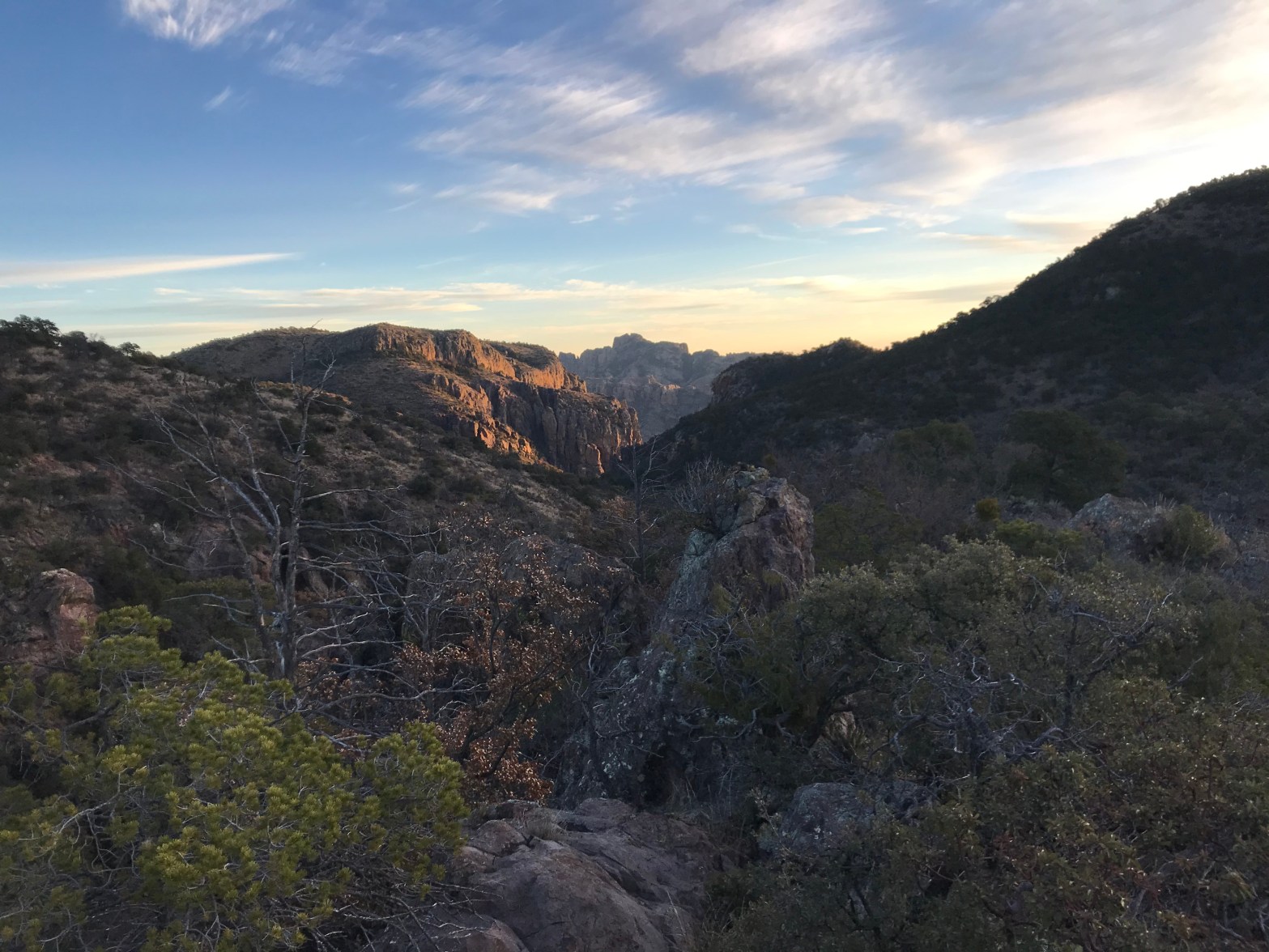
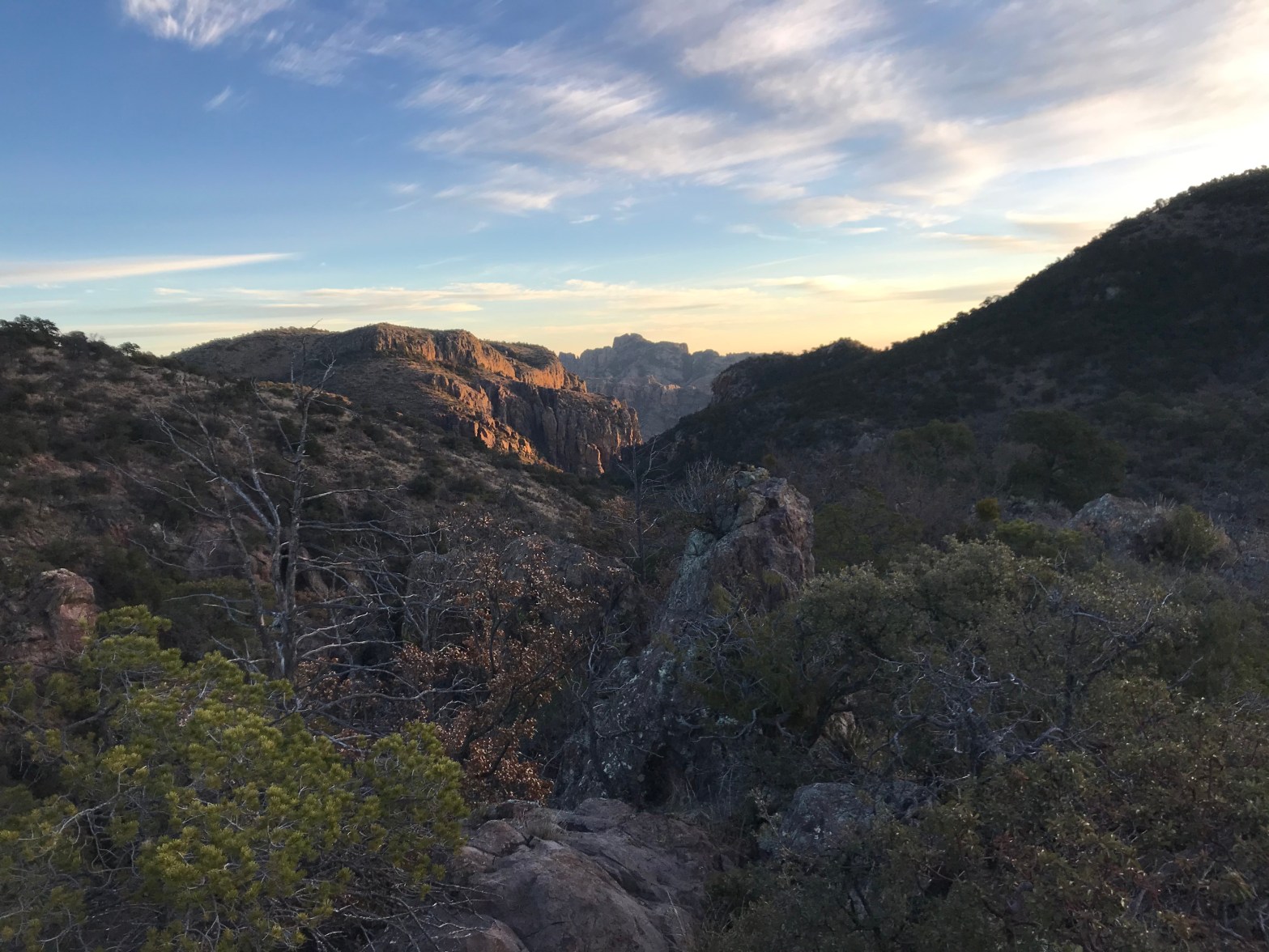
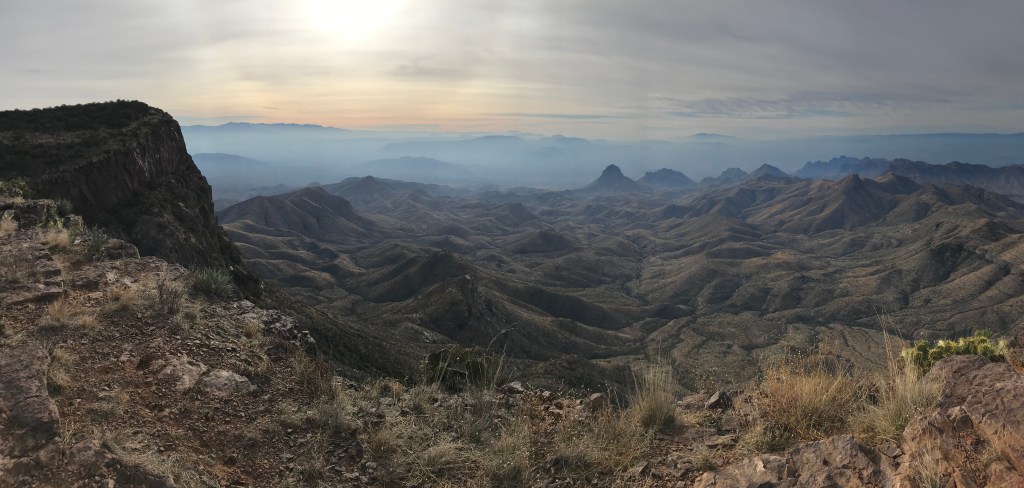
Views from the South Rim

As gorgeous as the view from the South Rim is, the context completely changed for me when I learned that the fog I saw was actually smog. Big Bend struggles greatly with issues of reduced visibility due to air pollution. Over half of Big Bend’s visibility impairment is due to sulfates, while organic carbons, nitrates, and wind-blown particles account for the remaining components. Sources of sulfate particles include coal-fired power plants, metal smelters, refineries and other industrial facilities. Air quality in the park varies by season and the winter is actually the most clear. Research indicates that during the summer, the poorest visibility period, pollution originates from sources in the eastern United States, east Texas and northeast Mexico. Efforts between the National Park Service, Environmental Protection Agency, the state of Texas and Mexico are being made to improve visibility through the use of modern emission-control technologies on existing pollution sources, the careful placement and control of new industry and the involvement of concerned citizens. Remember that we have beautiful spaces in our country that we need to preserve. Choices that you make everyday as well as in industry make an impact on our environment. Only support industries that perform environmentally friendly practices. Live responsibly!

Around the Big Bend

We returned from Mexico, grabbed dinner with our buddy Alex in Dallas, slept over again at aunt Darlene and uncle Charlie’s (thanks again you two!), then hit the road to the one thing in Texas we decided we had to see before we officially left the state – Big Bend National Park.

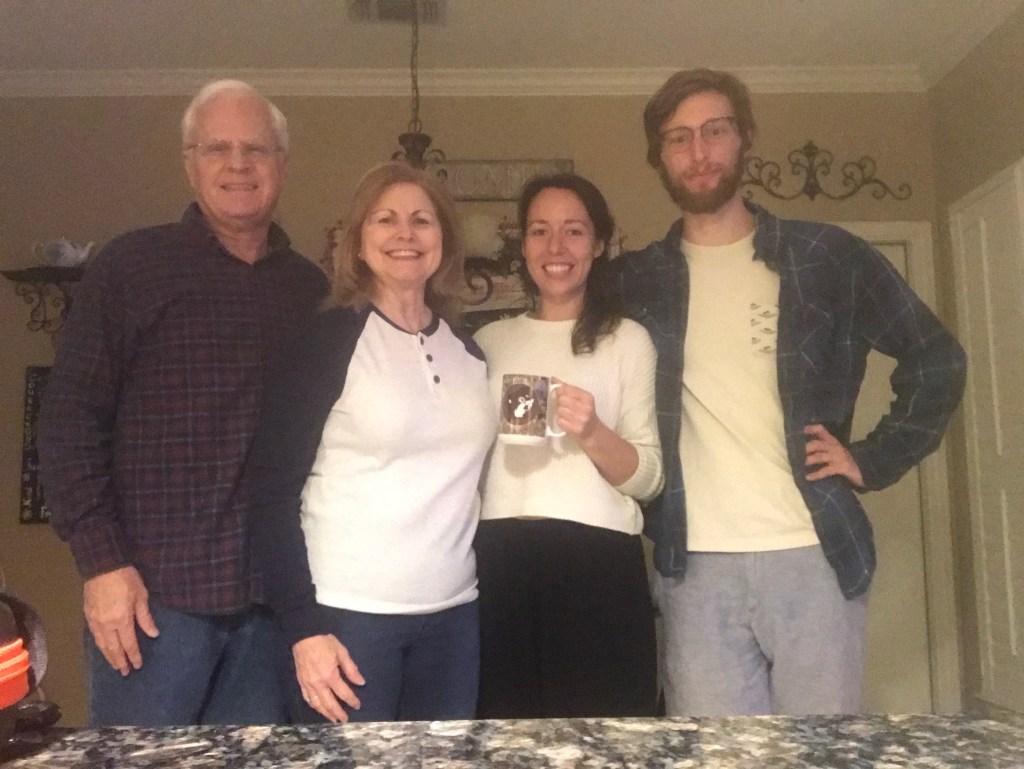
Having breakfast with sweet Charlie and Darlene. Includes coffee in a classic Buc-ee’s mug!

It was a good long drive through Texas out to Big Bend National Park. Wearing flowy pants and questioning something about the ethics of bear hunting (it’s a long story we don’t need to get into) got me called “a yogi or something” in Odessa and many comments were made about us needing “a bigger vehicle” (we drive a Prius) as we drove through oil field country. Needless to say, it was an odd drive out.

We arrived in Big Bend with no set plans and were very lucky to get a campsite that Thursday, let alone the rest of the weekend because we completely forgot that it was President’s Weekend and therefore park was at it’s busiest time of the year! More on that in upcoming posts.

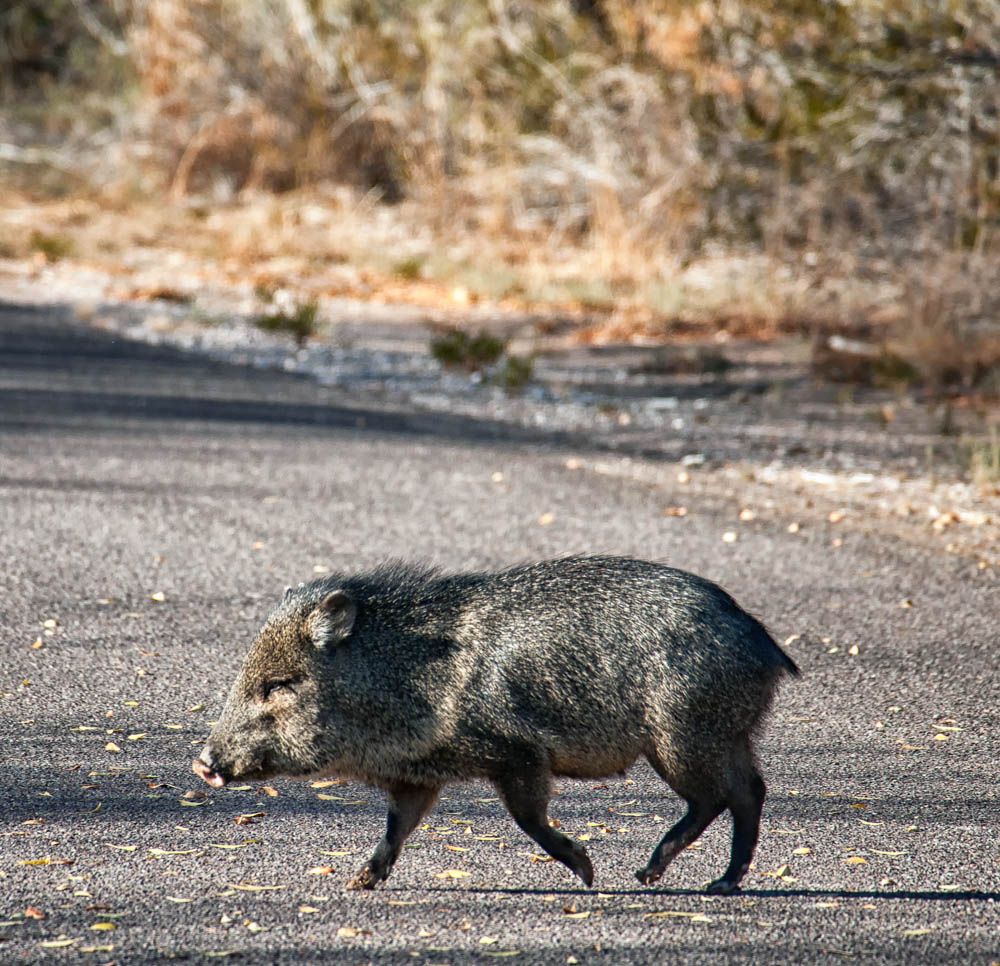
Baby javelina

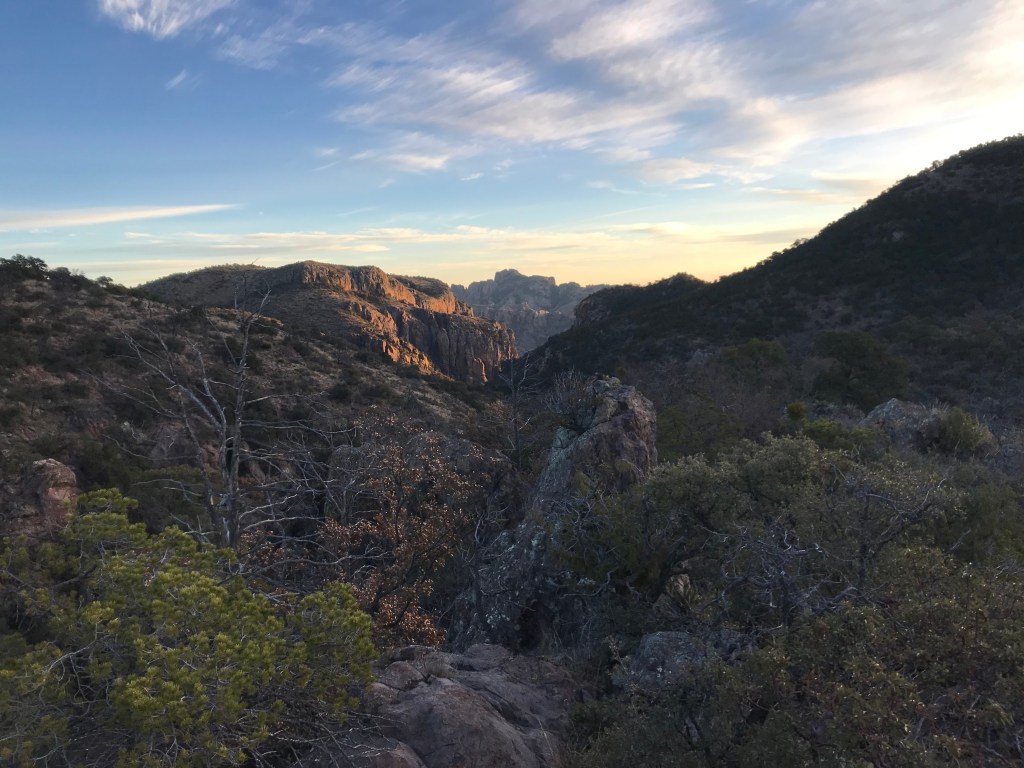
Our first impressions of the park was a mess of scale. Everything is so far apart and so large it was hard to put into context. Driving the 26 miles in from the Persimmon Gap entrance we struggled to understand what we were looking at while also avoiding a squadron of javelina (yes, a group of them is called a squadron) on the road as well as deer with huge ears. We laughed at the absurdity, the alien qualities, and the unexpected foreignness. We spent the night at Cottonwood campgrounds, another 35 miles into the park and a mere stones throw from the Mexico border. We decided on a three-day backcountry backpacking trip through the Chisos Mountains along the South Rim trail and the following morning was completely dedicated to organizing food, water, gear and our packs for trip. There’s not much too romantic about counting out rations, calculating calories, protein and carbohydrates but it’s all a necessary part of the experience.

Design a site like this with WordPress.com
Get started