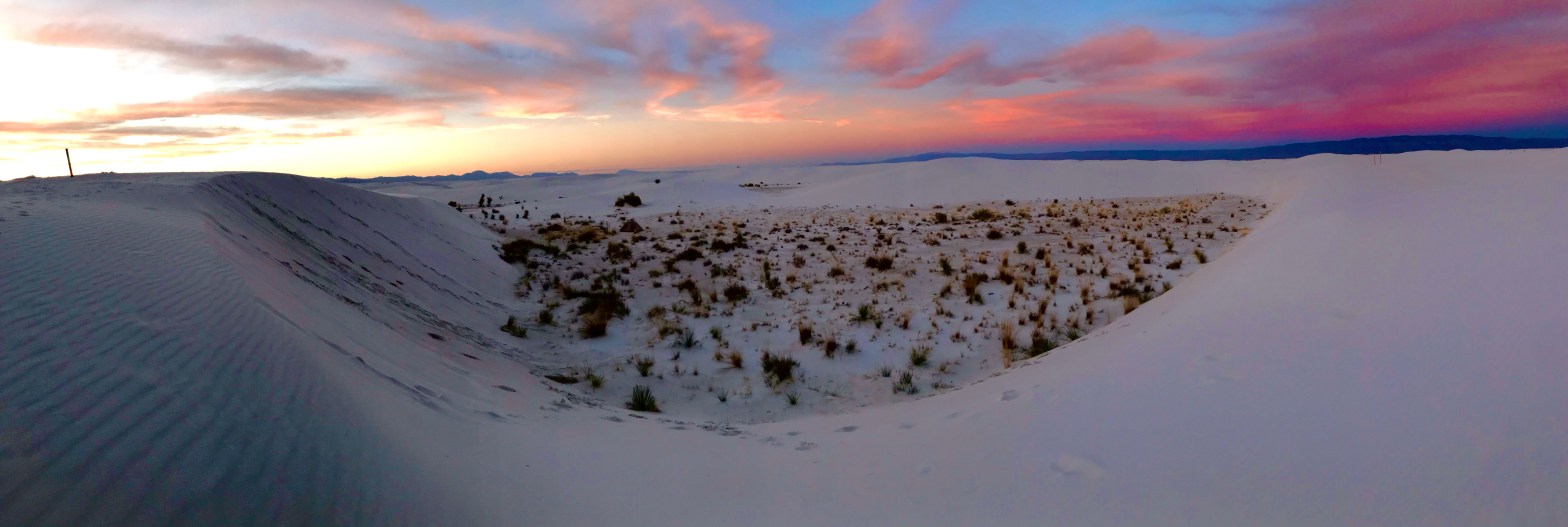
The sandy desert amidst a mountainous valley. Great wave-like dunes of gypsum sand engulf 275 square miles of desert, it is the world’s largest gypsum deposit, a gigantic dune field. Rising from the heart of the Tularosa Basin it is a bizarre landscape – unexpected glistening white sand in New Mexico. It is quite possibly the most underrated, unheard of, surreal, and unappreciated national park in the US.
White Sands National Park used to be a National Monument, up until last December when it was declared a Park. I’m not entirely sure of what this means for them but they certainly operate differently than any national park I have been to.
Before visiting, we checked the NPS website for planned closures because White Sands Missile Range surrounds the park and performs regular testing in the area. For public safety, the park and US-70 are subject to closures during missile range testing. Closures typically occur about twice a week and can last up to three hours.
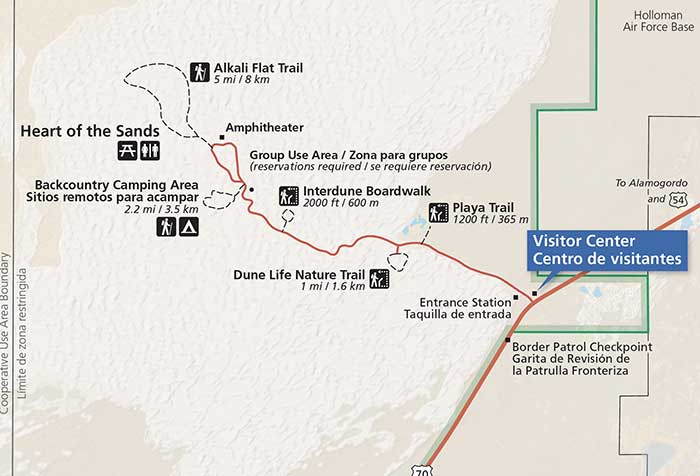
We arrived at the visitor center in the afternoon to reserve a campsite (they only accept in-person reservations) only to find a paper sign taped to the door telling us to go to the park entrance gate to reserve instead. There are only 10 campsites and all are first-come-first-served. There, a frazzled ranger was answering phone calls, getting entrance fees from another car and then handing over our camping forms. He gave us a comically poor map of directions to our campsites – it looked as if it were made in Microsoft Paint (sorry, forgot to snag a photo!). We got little direction besides this minimal map and some advice:
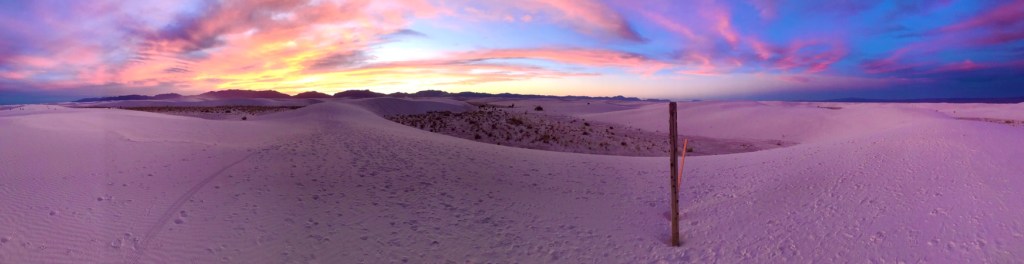
“The dunes are constantly moving,” the Ranger explained “so there are no paths to follow. There are marked sticks in the ground for you to follow. We have to constantly move the sticks as the dunes move. You are not allowed to hike after dark or in a sand storm as you will likely get lost. There is no water or reception – please prepare accordingly. Keep a reference point on the horizon, since it’s easy to lose your way out in the sands.”
He took our payment and signed forms, closed the window and went off to answer more calls and deal with the accumulating line of cars. A few miles down a paved road we began driving on a compact gypsum road. Even in February, the beating sun was shining off of the dunes with fierce blinding ferocity. We arrived at the backcountry parking and got out, tentative of how it would feel on our feet. Instead of burning our feet, the sand was cool to the touch and silkily smooth. After walking in circles and debating where to enter the dunes, we took off our shoes and tentatively headed out into the abyss without sight of the directional sticks.
With the sky overhead a soft blue and the silent sprawl of the gypsum dunes blanketed out to the horizons like clouds rising from the ground, White Sands National Park sprawled out as an alien landscape in the middle of nowhere. The dunes seem to roll out to a mountainous horizon but between here are there all perspective, color, and sound becomes amplified and distorted in a sense of wonder. With nothing to absorb sound, the merest whisper reverberates far over the neighboring dunes, making the sounds of children sledding down the gypsum sides an unknowable distance away sound as if they were within arm’s reach. Like sound, all orientation is lost out in the dunes.
We were happy to soon find the first post in the ground. Carrying our backpacks, we plodded across the tops of the dunes and surfed down the crumbling sides for about a mile and a half until we came upon the post with our campsite number. Down into the flats we went, soon we found ourselves walking across a more compact surface and looking for a spot to pitch our tent among some grass and short palms.
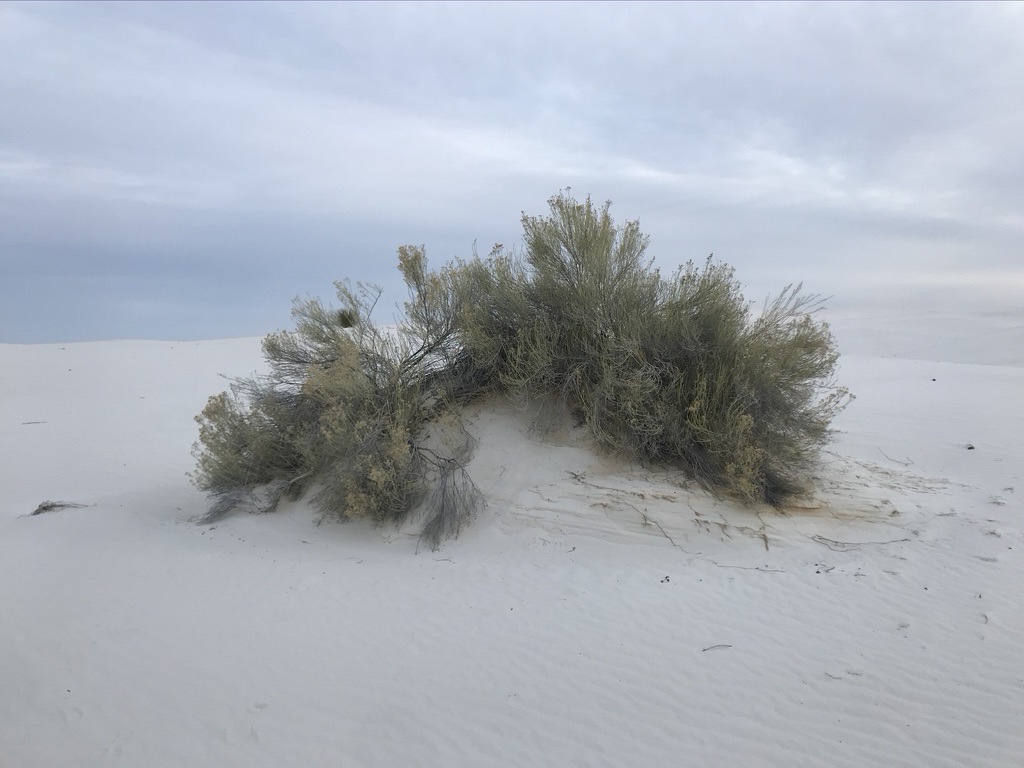
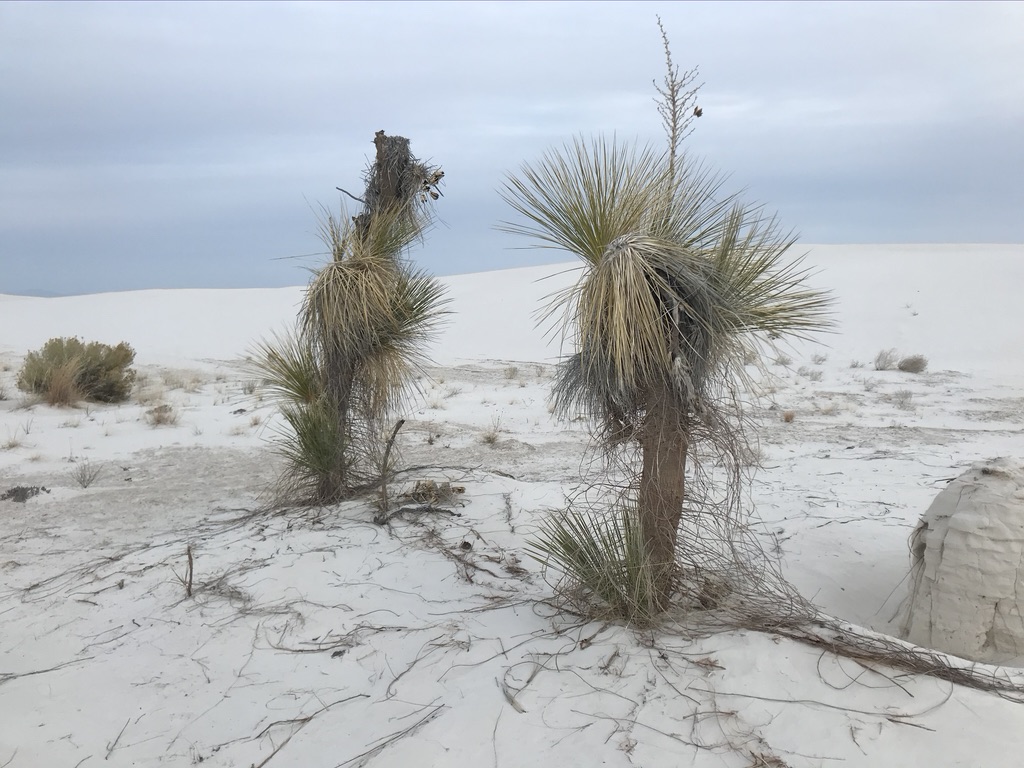
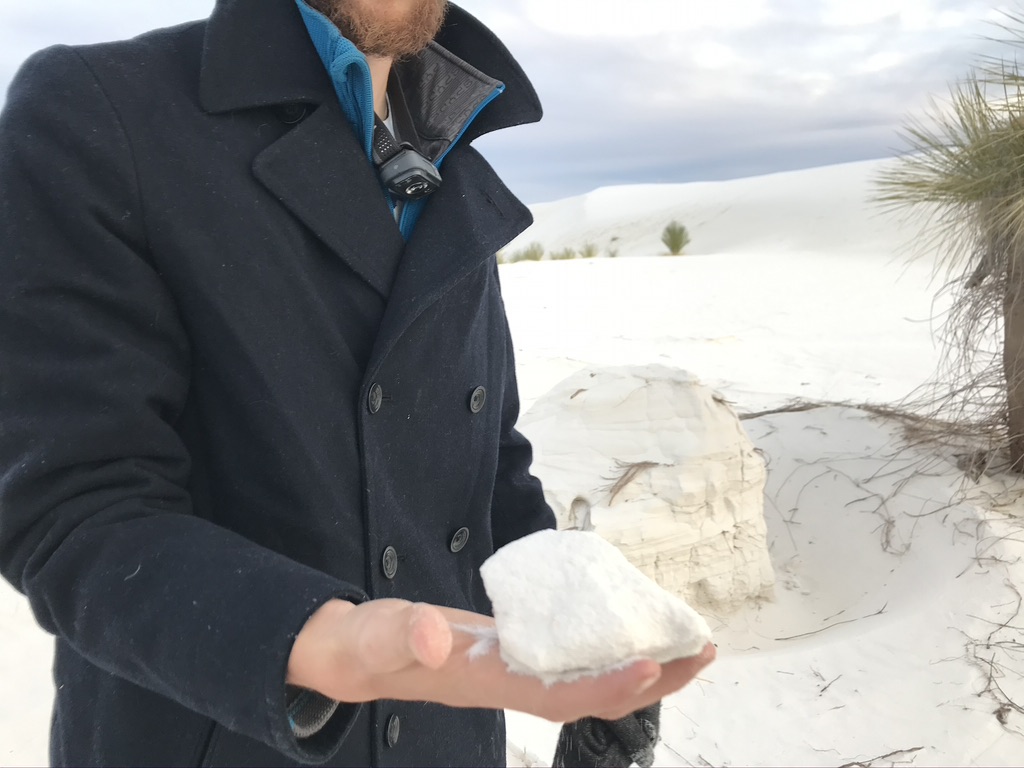
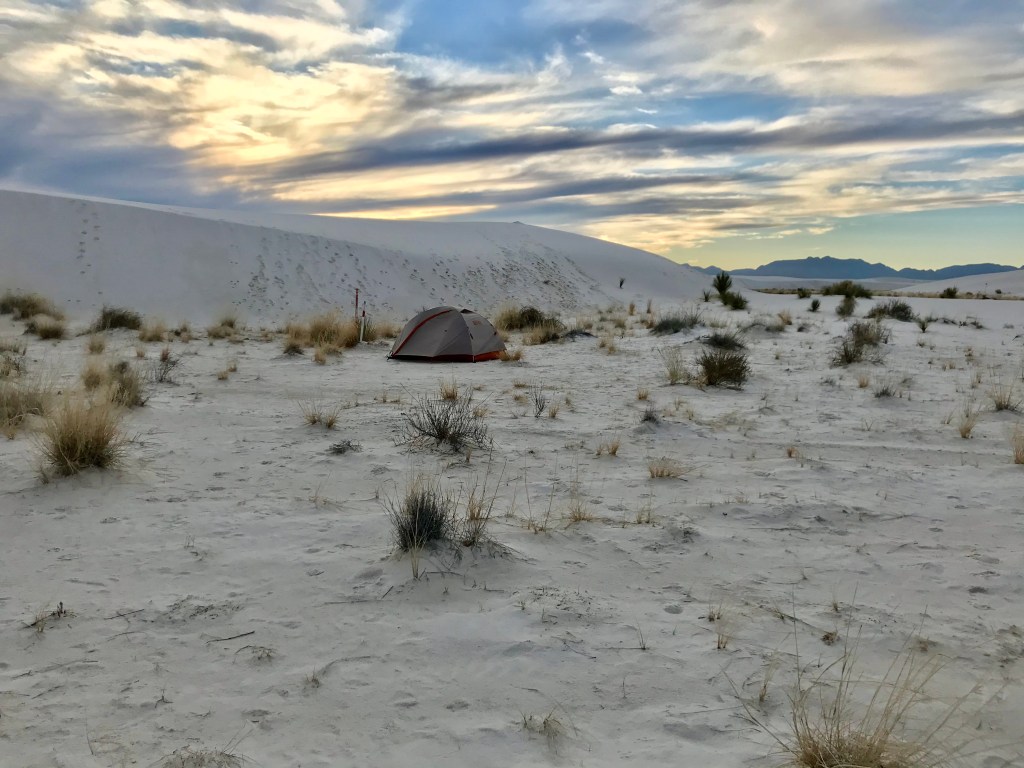
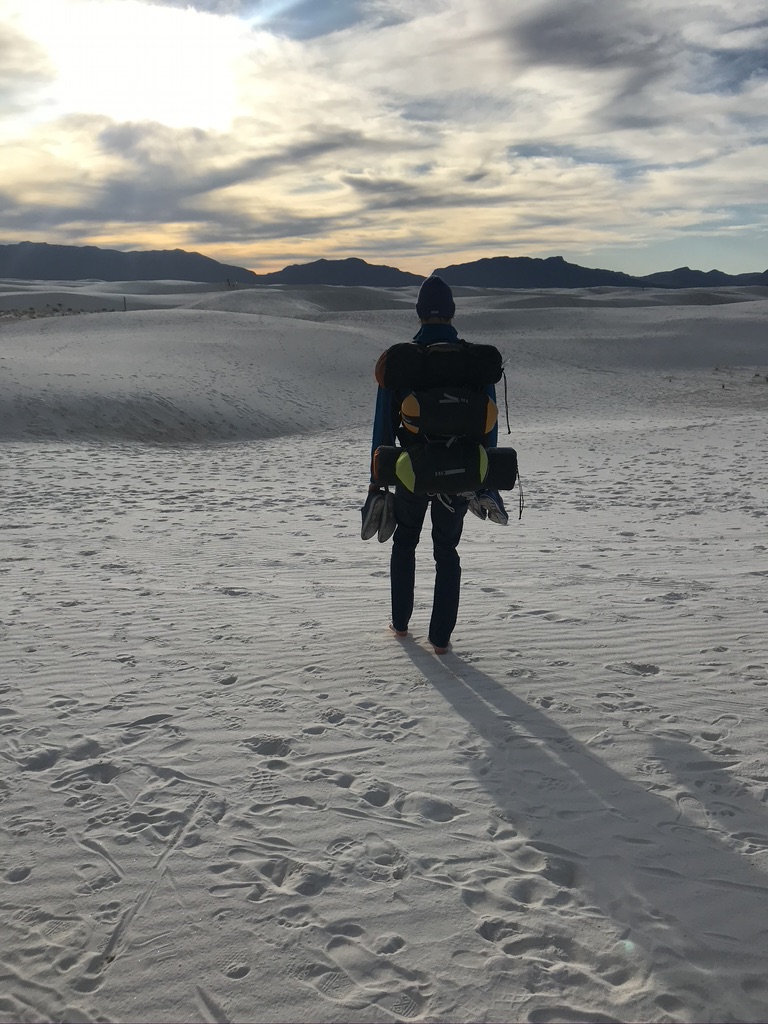
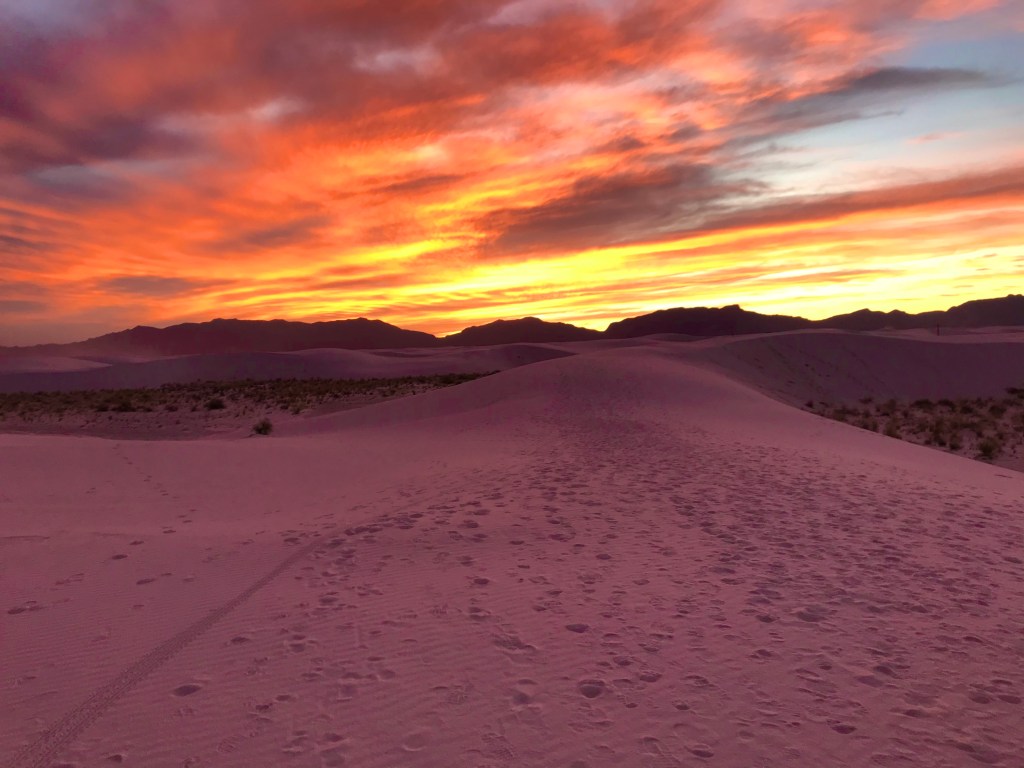
Soon enough, the clouds began to roll in and the sun began to creep behind the mountains. We grabbed our dinner, some water and extra jackets before setting out to the highest dune we could find. The orange sun set perfectly into a dip of the hills and began a phenomenal light show. Eventually we could barely eat because we were busy gaping at the colors all around us.
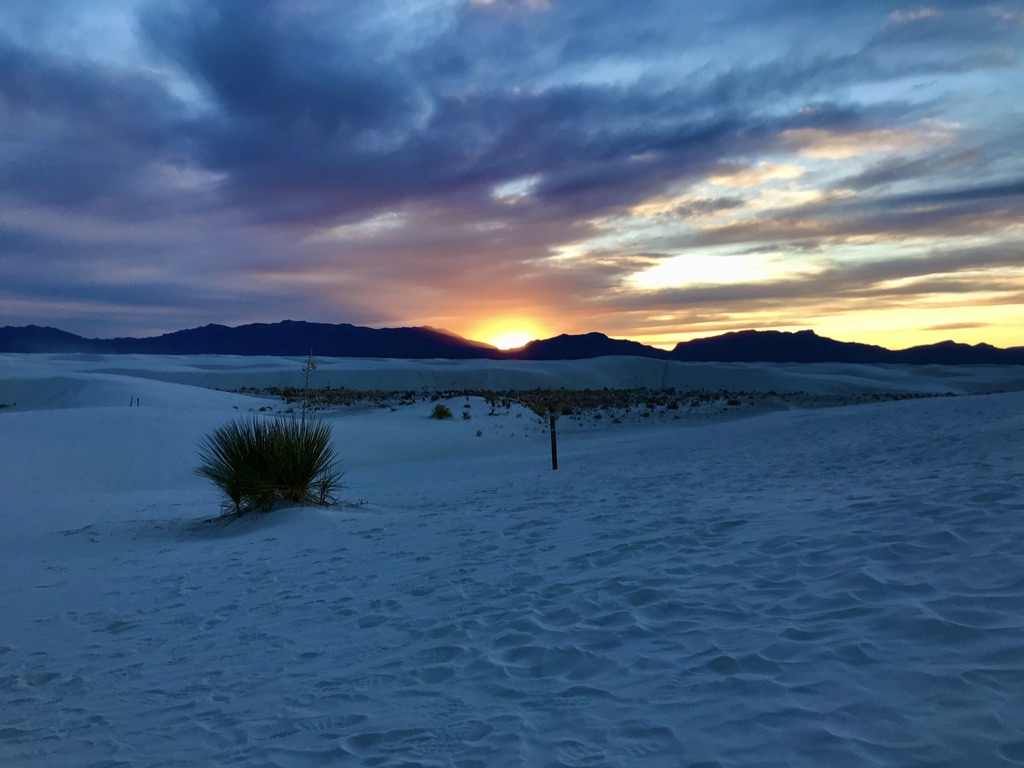
We enjoyed the park so much that we decided to stay a second night. Going into Alamogordo, the closest town to White Sands, was not much to write home about except for the wonderfully nice people that we encountered. Having not showered for six days at this point, Jon and I decided to stop at a truck stop for one of their inexpensive showers. A surprisingly lovely experience with top notch facilities, fresh towels and a very sweet attendant, we were refreshed and socially acceptable for restaurants. We grabbed lunch at a spot in town before heading up to the nearby Lincoln National Forest. I had heard good things about Cloudcroft, a mountain town not too far away so we ventured off to drop by the main strip, enjoying the small shops before coming back to White Sands.
Having grown up in the northeast and having lived in Texas for the past three years, I missed the thrill of sliding down hill. Back at the park, I rented a sled from the visitor center gift shop and hit the slopes! My legs were wobbly when I returned the sled a few hours later.
The whole experience leaves me wondering if perhaps some of the best parks this country has to offer are the ones you may not have heard of.
FUN FACTS:
- The White Sands National Monument is made up entirely of gypsum crystals that form dunes that stretch over 275 square miles.
- The site of the first atomic bomb detonation is located on the northern boundary of the National Park
- Gypsum, what makes up the dunes is actually a clear substance. The dunes appear white like snow because the gypsum grains are constantly banging into each other. The scratches then reflect the sun’s rays making them look white.
- Gypsum doesn’t absorb heat from the sun, so even on the hottest day of the year the dunes are cool and comfortable to walk on.
 Stark West Travels