
Hey, I’m with you. Given half a chance, I would much rather hit the road than the armchair. Nothing can replace the intensity of authentic experience. Yet behind every great adventure are the stories that inspired it. We read before we go and after we arrive. In the freedom of far-flung places, we invariably find echoes of the voices that led us there.
The following list is devoted to books that have offered inspiration, reflection, and provocations in me. These are the books that seize my imagination and inspire me to continue exploring. During our days of quarantine, perhaps we can spend time planning the next great adventure. Happy daydreaming!
STORIES OF THE GRAND CANYON
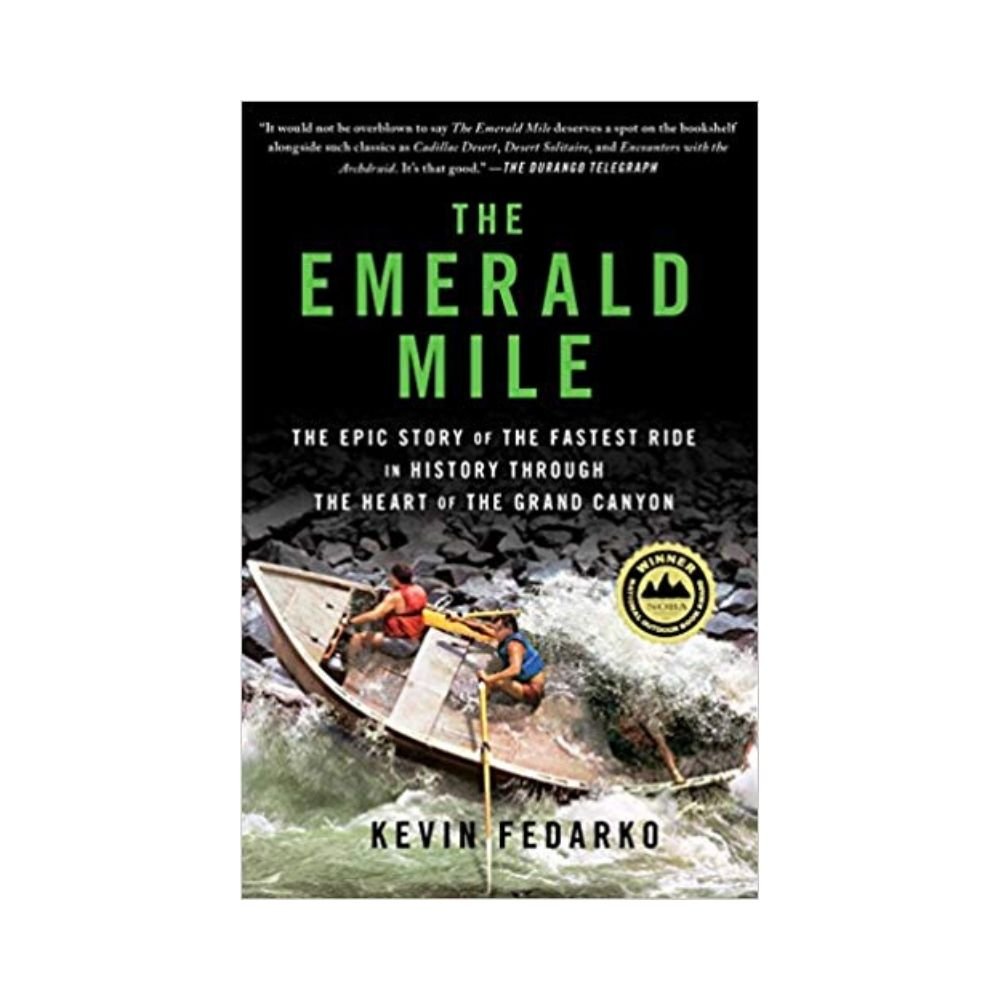
“The Emerald Mile: The Epic Story of the Fastest Ride in History Through the Heart of the Grand Canyon” by Kevin Fedarko (2013)
This was the first book I read just for fun after completing graduate school and either just because of that or the beautifully done research in the book, this has became one of my all time favorite books. Incidentally, I latched onto some other books mentioned in this one, hence the Grand Canyon having its own category in my list.
The “Emerald Mile” is the name of the boat that carried Kenton Grua and his friends down the Colorado, from Lee’s Ferry to Lake Mead, in record time. It was 1983, and dangerous flooding had turned the river into even more of a wild animal than it normally is.
Fedarko’s story about the speed attempt took a Grand Canyon campfire story and made it into a classic of adventure literature, weaving together the stories of early Grand Canyon exploration (including the Powell expeditions), the construction of the Glen Canyon Dam, the history of river guiding in the Canyon, and Grua’s biography into a rich narrative. But the book is worth a read for the adrenaline rush alone.
I found out about this story through my favorite podcast, The Dirtbag Diaries, when they interviewed him about how the book came to be. It turns out that before he could write the book, Fedarko had to run the river dozens of times to understand its personality, and his love for the river as it flows today shines through on every page. In the interview, he admitted that “the story of the speed run that’s at the heart of this book is honestly just a subversive excuse to indulge in an extended portrait of and love letter to the dories, the river, and the Canyon itself.” Though I find his writing a bit overdramatic at times, I completely fell in love with this captivating portrait of the Grand Canyon through his story-telling.
To learn more about the current threats to the Grand Canyon and how you can help, visit Save the Confluence and Grand Canyon Trust.
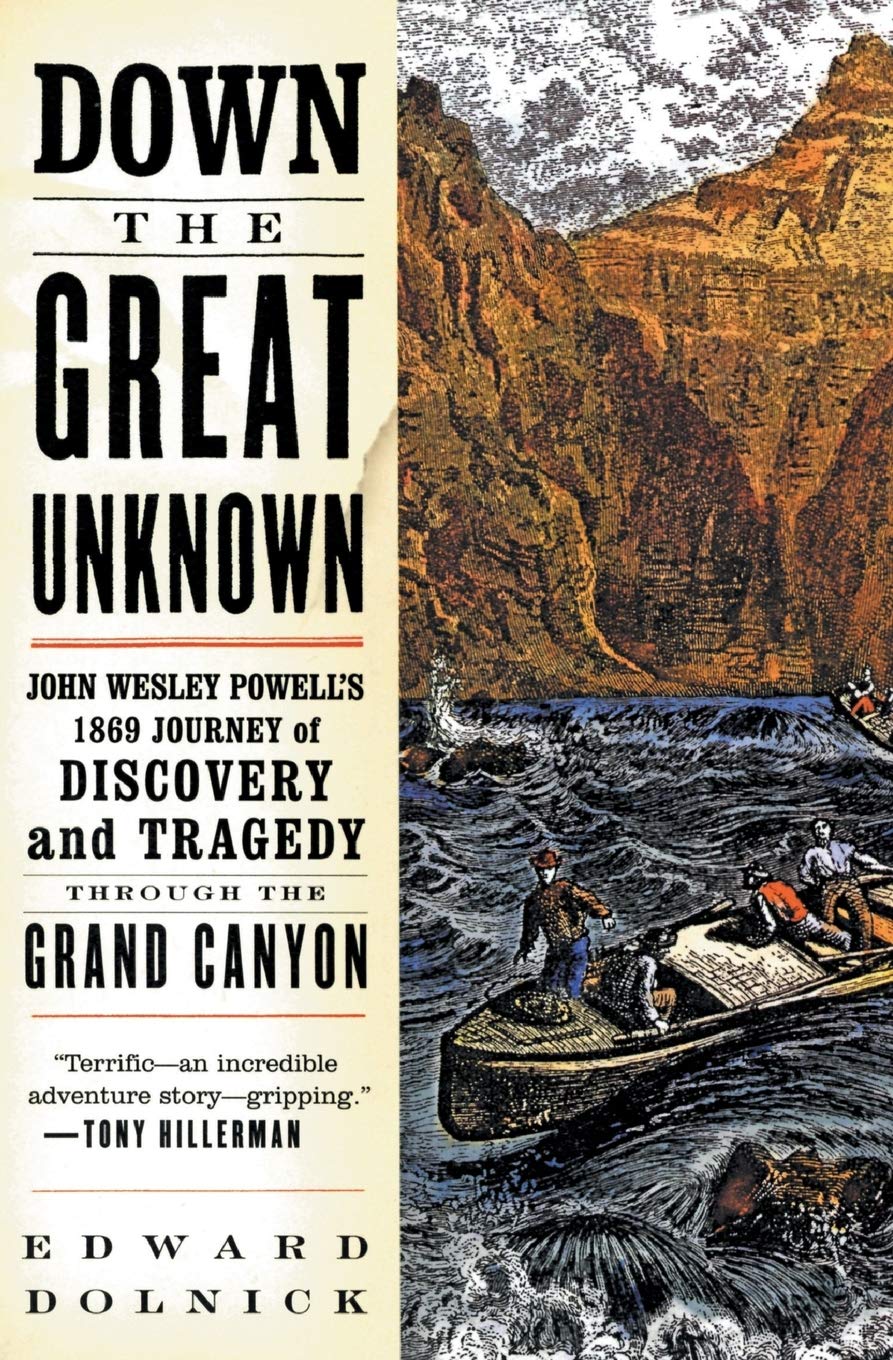
“Down the Great Unknown: John Wesley Powell’s 1869 Journey of Discovery and Tragedy Through the Grand Canyon” by Edward Dolnick (2001)
By 1869, the last unexplored stretches of American landscape were the rocky, inhospitable areas carved out by the Colorado River. That year, an eccentric one-armed Civil War veteran named John Wesley Powell assembled a rag-tag crew and set out to conquer that territory. Edward Dolnick’s book is a very detailed historical account of Powell’s journey as compiled from notes, journals, interviews and factual information gathered through a tremendous amount of research. The result is a day-by-day account of Powell’s journey, his teams’ personal lives and the newspaper stories that gripped a nation and brought worldwide attention to the first successfully recorded expedition down the Grand Canyon.
As you follow the story there are crude maps at the beginning of chapters to help the reader understand where the action takes place. Though Dolnick includes a larger map of the Colorado River at the front of the book, I thought it was way better to look at a more detailed map of the Colorado River when reading so consider getting yourself a copy. Soon enough you will be starting to plan your own post-COVID19 trip to the Grand Canyon!
“There’s This River… Grand Canyon Boatman Stories” edited by Christa Sadler (1994)
This collection of entertaining short stories is told entirely by the river guiding community of the Grand Canyon and edited by Christa Sadler. Some say that Grand Canyon whitewater boatmen like to read some of these short stories while on-river (I have never been so I’ve only been told so). There are funny stories of river passengers and guides, sweet stories of Canyon magic, goofy stories about wildlife and real stories about dramatic river trips. It’s a fun and easy read and really gives a good glimpse of life on the river.
BOOKS BY ROCK CLIMBERS
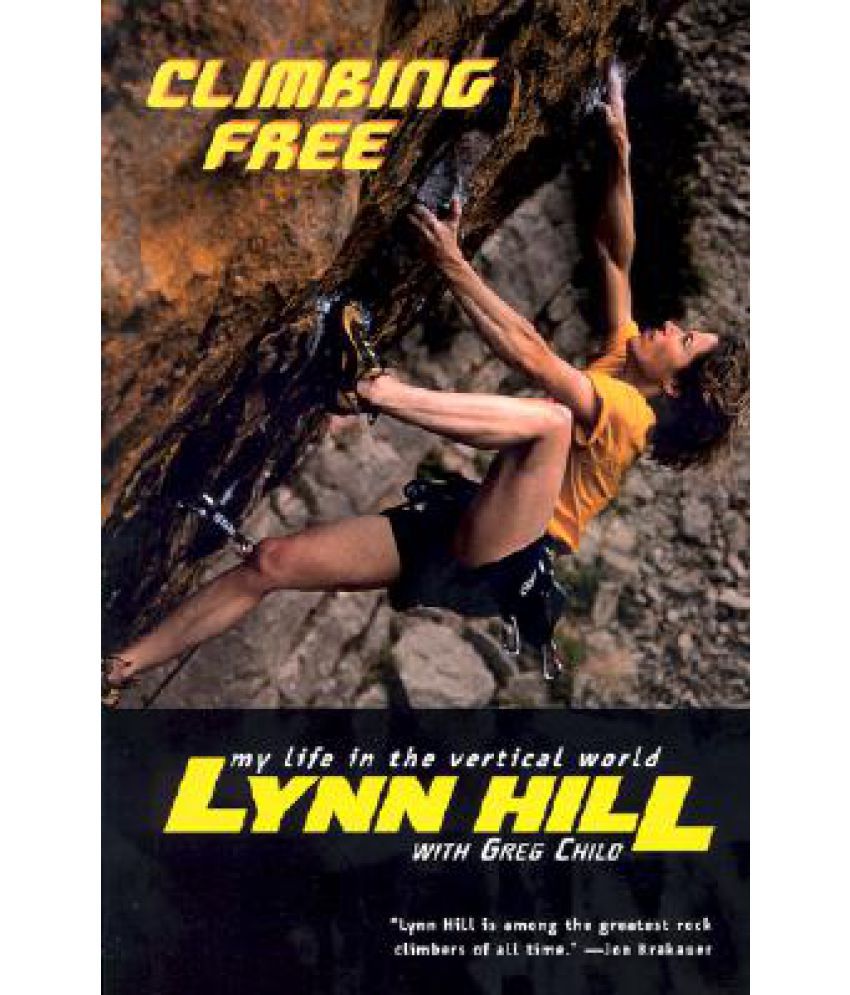
“Climbing Free: My Life in the Vertical World” by Lynn Hill and Greg Child (2002)
I borrowed this gem from a climbing buddy to learn more about the climbing legend, Lynn Hill. Lynn is one of the most amazing and overlooked athletes of our time. One of the best rock climbers in the world in the late 80’s and 90’s, she established routes so bold and difficult that few others could follow. In 1994, Lynn succeeded in climbing the first “free ascent” of the Nose on Yosemite’s El Capitan, climbing 3,000 feet of vertical granite without using gear to aid her ascent and in record time. At 5’2″, maybe 110lbs, with hands smaller than my own she’s a total badass and has become one of my all-time favorite idols.
This book is her official autobiography which covers all the major storylines you would imagine, from her introduction to climbing, her place in the legendary Stonemasters group, her rise to prominence in the World Cup, her famous 80-foot fall, and her triumph on the Nose. Lynn is open and frank about everything in this book including her struggles with relationships and toxic personalities. She struggles with unfair promoters, either because she’s a woman or because she’s not the hometown favorite. She argues against all of these not for her own benefit but in seeking simple fairness. She also owns the mistakes she’s made along the way. What touched me most was knowing that the world’s best had the same questions about what it means to be a “climber” that I think many climbers have.
There are some dark moments detailed in the book, not for effect, but in the interest of telling the whole story. If I were to say anything critical about the book, it’s the occasional cliché of wrapping each story up into a learning moment that together with the rest sum to the end goal, but perhaps that’s how highly driven, successful people like Lynn view life.
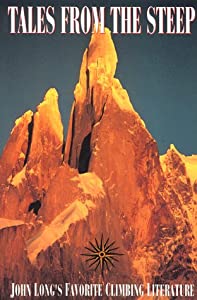
“Tales from the Steep: John Long’s Favorite Climbing Literature” edited by John Long (1993)
Lynn Hill mentioned John Long’s writing in her book (they dated for several years and are still friends). Long has some climbing classics – everything from his literary works, including Gorilla Monsoon, to his instructional efforts, How To Rock Climbing and videos he’s appeared in have been best selling efforts in the outdoor industry.
This collection of stories compiled by Long includes excerpts from his favorite stories, some of which are also included in this list of my book recommendations because this book is where I found them! His book includes a wide range of stories including diaries excerpts from Joe Simpson’s visit to the hospital after his Touching the Void experience, a portion of The Ascent Rum Doodle, as well as his favorite articles from rock climbing and mountaineering magazines of the 70’s and 80’s. From leading 5.13 pitches to marital struggles, John selected stories that will introduce the non-climber to the excitement climbers live off and stories that will make the seasoned alpinist nervous. They provoke a wide range of emotions – I recommend one story a night to fully digest each one separately.
CONSERVATION OF NATIONAL PARKS
“Climb the mountains and get their good tidings. Nature’s peace will flow into you as sunshine into trees.”
– John Muir
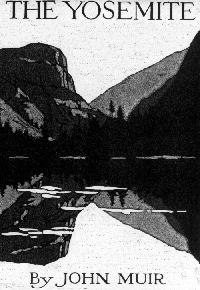
“The Yosemite” by John Muir (1912)
Who is John Muir? A wilderness prophet. An environmental philosopher. A man whose words and actions influenced president Theodore Roosevelt to consider more innovative wilderness conservation programs that would later establish the first national monuments by presidential proclamation and Yosemite National Park by congressional action.
In the spring of 1869, John Muir was looking for means of support to fund his explorations of California’s Central Valley region. A ranch owner offered him a job herding sheep in the Sierra Nevada. As he explored the region, he jotted down his keen observations of the scenic countryside, and he eventually became a guide for some of Yosemite’s most famous visitors, including Ralph Waldo Emerson. Muir documented these experiences in The Yosemite. It is a vivid, accurate description of the land and a passionate homage to nature. This book is an absolute classic and must read. I’m surprised it’s not required reading in high schools across the country.
Available for free online via the Sierra Club.
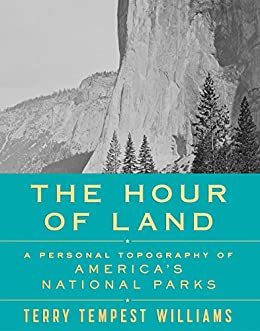
“The Hour of Land: A Personal Topography of America’s National Parks” by Terry Tempest Williams (2016)
Terry Tempest Williams is an environmental activist and writer. She pays tribute to America’s protected landscapes, taking a personal path through 12 national parks and national, the forces that threaten them, and the relationships they forge and sustain between humans, animals, and the natural world. Of herself and the more than 300 million other annual visitors to America’s wild lands, Williams wonders, “What are we searching for and what do we find?”
This book is, to me, imperfect, however her distinctive prose style is capable of conveying a deep spiritual dimension within the physical setting. The work is broadly ambitious but a deeply impassioned collection of essays on a select group of settings within the national park system. Her writing expands beyond recreational parks to include battlefields, monuments, and seashores. Williams reflects on personal ties to locations such as Grand Teton and stretches across the country to Arcadia National Park, where she discovers familial roots going back several generations. Other locations, such as Big Bend National Park and Alcatraz Island, offer first-time encounters. Williams provides well-documented histories of many of these parks, yet a more consistent thread running throughout the book touches on the rapid changes incurred in recent decades, primarily related to the destructive effects of climate change or by the interference and conflicting interests of the federal government and the oil industry. Williams’ message for preserving and respecting these sights is heartfelt, but she has a tendency to occasionally overstate her message, and her calls to action sometimes veer toward rants.
Regardless, mapping these emotional and political landscapes, Williams shows just how necessary the national parks are to this country’s psyche. This is an important, well-informed, and moving read for anyone interested in learning more about America’s national parks.
MOUNTAINEERING STORIES
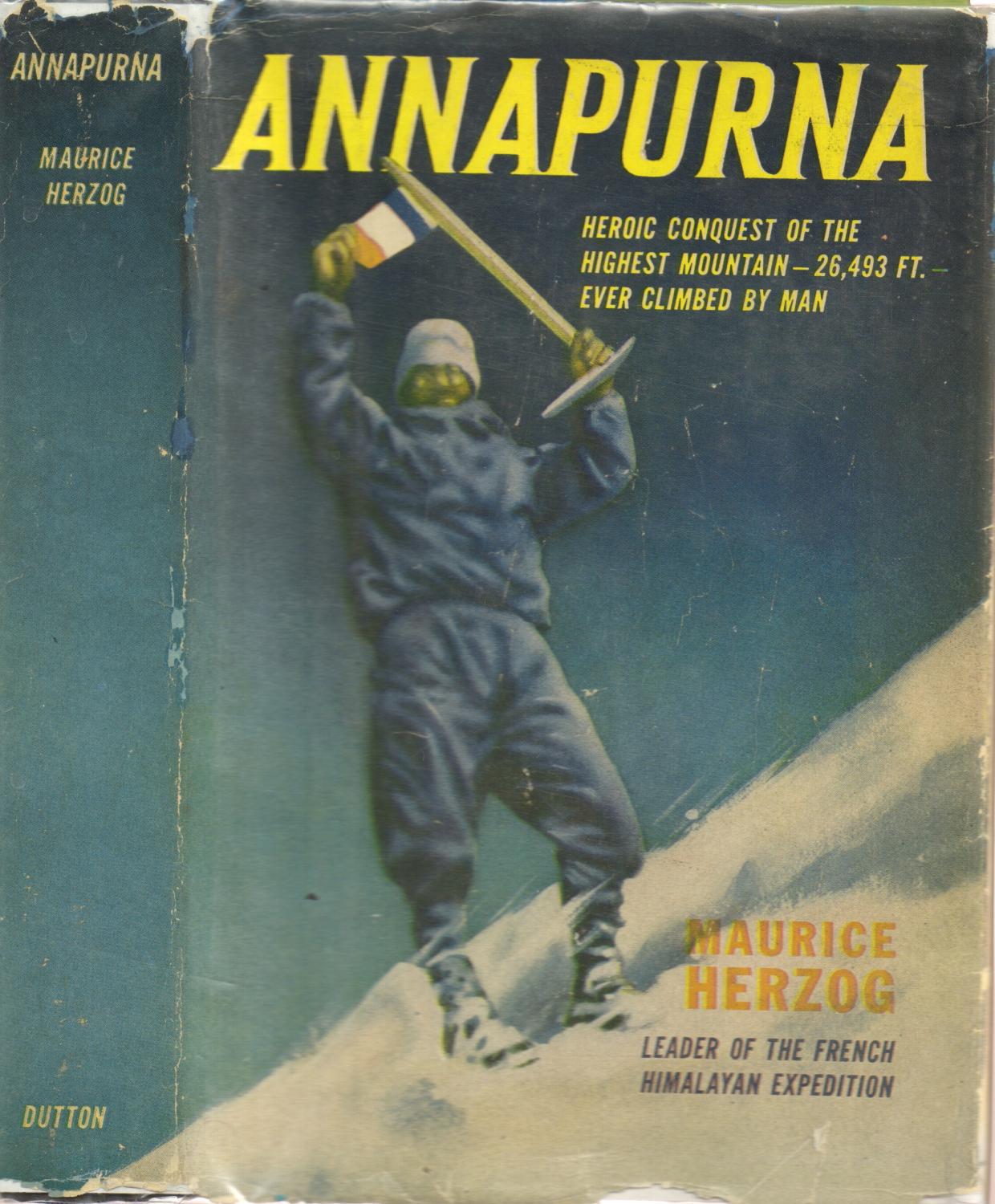
“Annapurna: First Conquest of an 8000-meter Peak” by Maurice Herzog (1951)
My father-in-law gave me a stack of his adventure books last December and amongst them was this gem. Annapurna is the story of the first expedition in history to summit and return from an 8000+ meter mountain, Annapurna in the Himalayas. Though now seventy years old, it remains one of the canonical works in exploration literature as it is probably the best-selling mountaineering book ever written. Written by the leader of the 1950 expedition, French climber Maurice Herzog’s lyrical though somewhat self-serving account explores the hardships of achieving such a feat.
Unlike other climbs, the routes up Annapurna had never been charted. Herzog and his team had to locate the mountain using crude maps, pick out a single untried route, and go for the summit. The following unforgettable account of this heroic climb and its harrowing aftermath includes a nightmare descent of frostbite, snow blindness, and near death. Herzog’s masterful narrative is one of the great mountain-adventure stories of all time though more recent editions may also include diaries of his comrades and depicts an even less romanticized picture of their efforts.
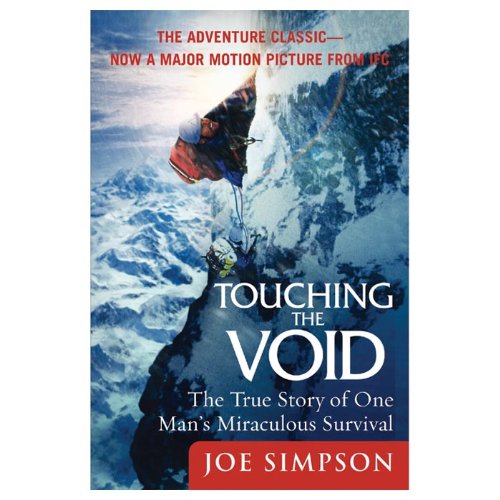
“Touching the Void: The True Story of One Man’s Miraculous Survival” by Joe Simpson (1988)
In my opinion, this is the best survival story out there. Joe Simpson and his climbing partner, Simon Yates were climbing a 21,000 foot peak in the Andes when Simpson suddenly plunged off the vertical face of an ice ledge, breaking his leg. In the hours that followed, darkness fell and a blizzard raged as Yates tried to lower his friend to safety. Finally, Yates was forced to cut the rope, moments before he would have been pulled to his own death. The next three days were an impossibly grueling ordeal for both men. Yates, certain that Simpson was dead, returned to base camp consumed with grief and guilt over abandoning him. Miraculously, Simpson had survived the fall, but must fight his way down the mountain to reach base camp in time.
Concise and yet packed with detail, Simpson’s harrowing account of near-death in the Peruvian Andes, is a compact tour de force that wrestles with issues of bravery, friendship, physical endurance, the code of the mountains, and the will to live.
The book was adapted into a fantastic movie that includes film of Simpson and Yates recreating some of the climbing on the same mountain, years after the incident.
LIGHTHEARTED READS
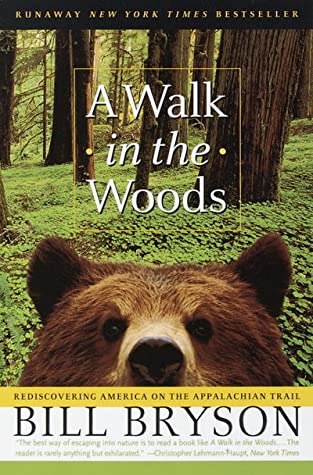
“A Walk in the Woods: Rediscovering America on the Appalachian Trail” by Bill Bryson (1997)
My husband, father, and brother all recommended this book to me. I have never read Bill Bryson before but I’m currently laughing my way through this one. I found it humorous about his misunderstandings of preparing for the hike, the shock at equipment prices, and his smugness on outlasting his fellow hikers on the trail.
Back in America after twenty years in Britain, Bill Bryson decided to reacquaint himself with his native country by walking the 2,100-mile Appalachian Trail. To a writer with the comic genius of Bill Bryson, the long trail provided endless opportunities to witness the silliness of his fellow hikers. Bryson is accompanied by the gloriously out-of-shape Stephen Katz, a frenemy from Iowa along for the walk.
A Walk in the Woods is also more than just a laugh-out-loud hike. Bryson’s acute eye is a wise witness to this beautiful but fragile trail, and as he tells its fascinating history, he makes a moving plea for the conservation of America’s last great wilderness.
To learn more about the current threats to the Appalachian Trail and how you can help, visit The Appalachian Trail Conservancy
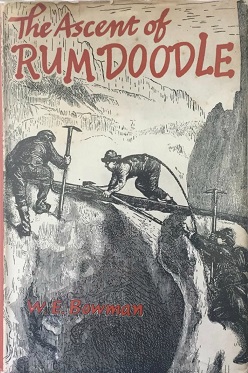
“The Ascent of Rum Doodle” by W. E. Bowman (1956)
If this, the definitive, oddly obscure account of the conquest of “the world’s tallest mountain” fails to leave you gasping for oxygen from all the laughter, see a therapist. A brilliant set up of self-important peak-bagging gas.
In Bowman’s parody novel, a bumbling group of British mountaineers mounts an assault on Rum Doodle, a 40,000 foot neighbor of Everest. The good-hearted but naive expedition leader, Binder, is accompanied by Constant, the language expert and circus addict; Jungle, the route finder who loses his way to the assembly point; Wish, the scientist; Prone, the doctor, who contracts every form of measles known to man; and their team cook, a Yurgistani called Pong, who is feared by all for his ‘nauseating brews’. They are helped in their ascent by 3,000 porters who not only carry their luggage but often the explorers too. Especially memorable is a homo-erotic wrestling match at 27,000 feet. This is the record of their farcical attempt to reach the summit.
First published in 1956, The Ascent of Rum Doodle received little attention except within the mountaineering world. I first learned about this hilarious novel through John Long’s favorite literature covered in the book Tales From the Steep.
These are all books that I’ve read within the past year – I’ve been on a niche kick. I have several others to list at another time but feel free to ask for specific styles of recommendations in the meantime.
Any other books that you recommend? Leave a comment below!
 Stark West Travels